George S. Patton Quotes
I hate to change leaders in battle, but the new leader is better than a timid one.
Patton had just relieved General Orlando Ward of his command.
George S. Patton, 1885-1945, U.S. Army General, 1943
Sourced by: Eigen's Political and Historical Quotations


Written when he was forced to share command with General Francois Kellerman.


He was objecting to the current crop of senior military officer who have little experience in fighting and much in academic, strategic and technical training. Many however see him as a dinosaur who does not realized the complex nature of the modern military missions. In general, we have won almost all of our fighting battles but often failed in our maintaining civil society, occupation, nation building, military procurement, preventing sexual assault of our own troops by our own soldiers, assuring mental health of our soldiers. Hackworth, detractors argue, wants to change what already works and ignore what does not.


Attlee was not the first person who observed this phenomenon about peace and war politics but his articulation of it is classic.

While the Southerners, and Northern Democrats accused Lincoln of precipitous, hasty and radical actions, radicals of his own party were not happy with him as he didn't move fast and firmly enough.


This was an indirect swipe at President Lyndon Johnson.


Few high ranking officers, or officials of civilian organizations, take the responsibility for subordinates not understanding instructions.

This is not the most common view military view which tends to place the senior officers out of harm’s way as they are “too valuable” to become casualties. Among modern armies, Israel stands out as having the same leadership doctrine as Genghis Khan. Those who attack Israel and lose, never have their commanders at the front of the battle. Israel does.


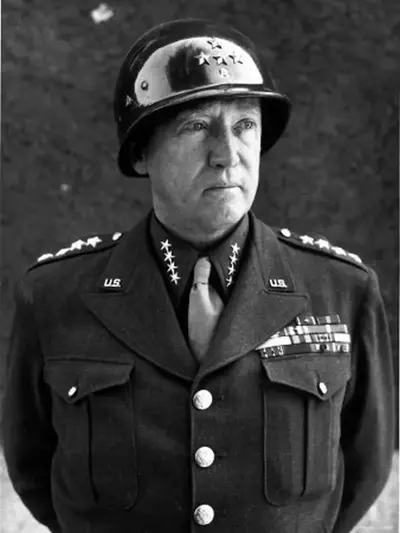
George Smith Patton Jr. was a general in the United States Army who commanded the Seventh United States Army in the Mediterranean theater of World War II, and the Third United States Army in France and Germany after the Allied invasion of Normandy in June 1944.
