Winston Churchill Quotes
The important thing is the boldness of the President. He will lead opinion and not follow it. He does not want war but will not shrink from it.
Winston Churchill, 1874-1965, British Prime Minister (Conservative), Statement to confidants regarding Franklin D. Roosevelt, Quoted on The Military Channel, Roosevelt vs. Churchill, September 13, 2007
Sourced by: Eigen's Political and Historical Quotations

Attlee was not the first person who observed this phenomenon about peace and war politics but his articulation of it is classic.


In the early 1970's Congress began to assert itself in foreign policy. An amendment was proposed by Mike Mansfield to halve the troops committed to NATO:


Theodore Roosevelt was the Presidential nominee. Johnson was a leader of some members of Congress some of whom were extreme isolationists and some of whom were Nazi sympathizers and Hitler admirers. When the Japanese attacked Pearl Harbor later that year, Germany, fulfilling its treaty with Japan, declared war on America, Johnson’s group no longer mattered. Before WWII most Republicans were opposed to Defense Spending and accused the Democrats of being war hawks. After WWII, they flip flopped and became more hawkish than the Democrats who they accused of being soft on defense for years thereafter. See {631380} for President Roosevelt’s different view.

Shortly after, he backed off the notion of having a bloodbath removing protesting students.

Neville Chamberlain is viewed in Britain as one of the worst appeasers of all time. He refused to fulfill the obligations of Great Britain when Hitler invaded parts of Europe. He appeased Hitler because he wanted to avoid war and is a historical icon of a person who would do anything to avoid war.


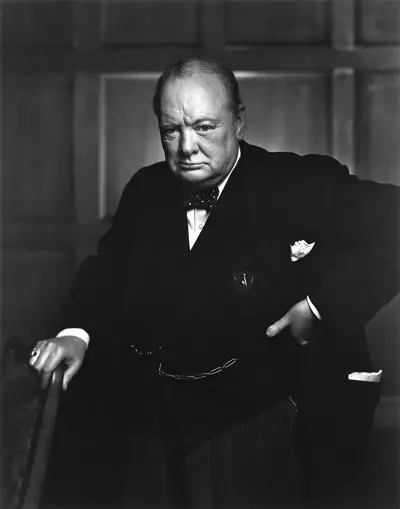
Sir Winston Leonard Spencer Churchill, KG, OM, CH, TD, DL, FRS, RA was the Prime Minister of the United Kingdom from 1940 to 1945, during the Second World War, and again from 1951 to 1955. Apart from two years between 1922 and 1924, Churchill was a Member of Parliament (MP) from 1900 to 1964 and represented a total of five constituencies. Ideologically an economic liberal and imperialist, he was for most of his career a member of the Conservative Party, as leader from 1940 to 1955. He was a member of the Liberal Party from 1904 to 1924. Churchill was also well known for his military career and as a historian, painter and writer, and among his many awards was the Nobel Prize in Literature.
