Dean Acheson Quotes
I had the gravest forebodings about this organization and warned the President that as set up, neither he, the National Security Council, nor anyone else would be in a position to know what it was doing or control it.
the new CIA in 1947 He turned out to be right. The CIA has been a control problem ever since.
Dean Acheson, 1893-1971, U.S. Secretary of State (Democrat), Present at the Creation
Sourced by: Eigen's Political and Historical Quotations


In an ironic precursor to the Iran-Contra scandal to come a decade later:

We tend to be hard on our intelligence agencies for a combination or reasons. Because much of their activity is secret and many of their successes are not known to the public. If they have a great success, the politicians generally take the credit. But if the intelligence agency makes a big error that causes a failure of some kind, a the politicians often violate the secrecy and blame the intelligence agencies. The Iraq Invasion of the George W, Bush administration was a good example. The President had received intelligence that Iraq was developing nuclear weapons. He invaded to prevent their being used. It turned ouit that there were no nuclear weapons at all, and the President and leaders of hs cabinet had misled, the people, the Congress, the UN and world opinion and started a war on false pretenses. The administration then went public about the intelligence failure. There was a great deal of intelligence that indicated that there were no Iraq nuclear program but these never reached the President, the military or the public. In addition, the intelligence agencies have missed some really major events, like the fall of the Soviet Union or the Chinese Communist victory in the Chinese Civil war. But intelligence is not an exact science; mistakes are inevitable, The politicians using the intelligence tend to think that intelligence estimates are more certaini than estimates can be. However the CIA in particular has had periods of rogue and illegal activities just which cause many citizens ro distrust them. They have illegally investigated Americans, actually conducted experiments with chemical weapons in American cities without any permission or authority, violated American law in the way they treat prisoners,and destroyed evidence, broken the law by conducting activities that Congress and the President had explicitly forbid. The FBI has also broken the law and spied on Americans who were critical of the government, and slandered the reputations of some Americans by “leaking” information that oftn was not even true. So the current intelligence have to bear the burden of their predecessors, but because of the secrecy, cannot take advantage of all the wonderful accomplishments and great sacrifices of many members of the intelligence agencies.


There have been many examples of Presidents in time of war who have asked Congress & received additional powers whose constitutionality was sometimes tested. The Alien & Sedition acts of the John Adams administration, Lincoln in the Civil War controlling the Southern governments, Wilson jailing people verbally opposing the draft, FDR incarcerating Japanese Americans in WWII. However, in those cases, the President asked for and got the powers from Congress. Nichols claimed that by Bush, just assuming powers, he was acting like a king & not a president, and that per se was an impeachable offence. As unpopular as Bush was, his Vice President was much moreso, & Bush was in his last term; neither party wanted to go through another impeachment after the Republican attempt to oust William Clinton ended in acquittal. Other constitutional scholars do not believe the “acting like a king” rises to the level of an impeachable offense; only specific “high crimes & misdemeanors” would qualify.

Senator Church was the chairman of the committee. It’s reports (14 in all) are the most extensive documentation of U. S. intelligence ever compiled.

President George W. Bush, during the War on Terror, asserted the authority to contravene laws passed by Congress and signed by a previous president. He further, argued that he did not have to inform Congress when he ordered steps that broke the existing laws. His position was based on his claim that there were inherent Presidential powers in wartime granted by the Constitution and the Congress could not override the Constitution.


Agree resigned from the CIA in protest to its political position.

During the Nixon administration FBI director J. Edgar Hoover was requested by White House operatives to cooperate with "the Houston Plan" of illegal surveillance of many Americans. Hoover refused arguing that it was too risky.


The intelligence agencies had in many cases not shared critical information with the oversight committees and the White House and in a number of cases actually lied to them.
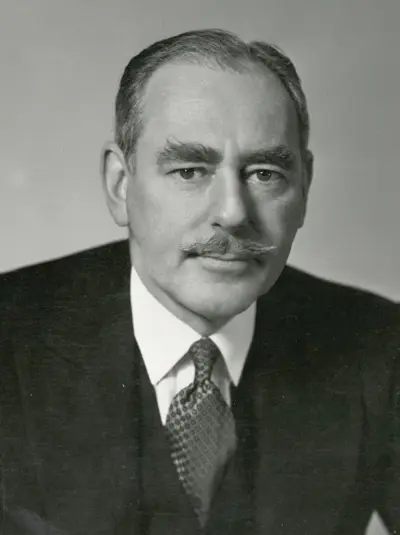
Dean Gooderham Acheson was an American statesman and lawyer. As United States Secretary of State in the administration of President Harry S. Truman from 1949 to 1953, he played a central role in defining American foreign policy during the Cold War. Acheson helped design the Marshall Plan and was a key player in the development of the Truman Doctrine and creation of the North Atlantic Treaty Organization.
