Dee Rees Quotes
I grew up in Nashville in a white suburb. We lived next to a Klan member. We didn't see hoods, but my dad knew that guy was a Grand Dragon.
Anderson, Tre'vell. "Dee Rees on the 'Pathologically Violent' History of America in 'Mudbound'." Los Angeles Times, 17 Nov. 2017.


Buying furniture and equipment for Negro schools was perceived by the White Population as “squandering public funds”. Web returned with the Militia but no one would testify against the Klan. Huggins left the area and went to the North. The Klan did not kill him, but they accomplished their objective of intimidating all the local people Black and White so that Negro schools would not be furnished and getting rid of the only White who tried to improve Negro schools. The methods of terrorists have not changed much since then.


Forrest went on to be the first National Leader of the Terrorist Organzation.


Theodore Roosevelt, became President when President McKinley was assassinated. One thing that he did was to have the Negro leader, Booker T. Washington to lunch at the White House. He had previously had Blacks in his famous Rough Riders. Although Roosevelt had not taken a public position in inter-racial marriage, in the South, and much of rest of the country, accusing someone of favoring miscegenation was as serious an insult as there was. The accusation was used to attack anyone who did not favor segregation, lynching and Jim Crow in the same way that people who favored Medicare or Labor Unions were called “communists”. Cardamon himself was the target of many for his disrespectful and gross description of the president. See Quotation


While the Western nations were doubtless guilty of blatant racism and anti-Asian discrimination, the Japanese protest was tainted with a substantial degree of hypocrisy. At the Versailles Peace Treaty negotiations the Japanese argued strenuously for equal treatment of Japanese by the West but did not favor extension of the equality principle to Koreans, Chinese, Thais, Chomoros, and other Asian peoples. Japan itself, led by its Emperor, considered other Asian people racially and culturally inferior. Thus they were the inherent leaders of Asia and all Asian people.

Incredible as it seems today, no Black person had ever dined in the White House as a guest of the President. African American servants were common. And Abraham Lincoln had received many Black visitors as had Presidents after him. But no president had ever had a Black person to dine as a social equal. The photo, reproduced here, illustrates the parity. But that was the worst thing a President could do so far as Tillman and his fellow racists were concerned. They had, since the end of the Civil war, used violence and terrorism to murder, maim and/or intimidate the Negro population to remain in an economic and socially inferior position. In Tillman’s state over these decades they had more lynchings than legal executions and there were plenty of them. Newspapers over the South riled up the whites and there was a wave of terror to be sure that the President’s importune action would not be taken as an endorsement of the Negro’s right to any equality or even dignity. This dinner essentially wedded all the Blacks to the Republican Party and all the Southern Whites to the Democratic Party. This would remain the political situation for over 60 years until the Democrats passed the LBJ Civil Rights Act in 1964 and the Republicans decided to solicit the Southern White racists who accepted the invitation and within a few years, there was a complete reversal of party loyalty of most Blacks and most Southern White Racists.


This classic quotation illustrates several things. First, the degree of racism that existed in 1944 in West Virginia. Second, not how young Robert Byrd immediately leaped from the possibility of integrating our fighting forces to interracial sex. That has been typical of white racism in America—a preoccupation with race and sex. Last, Byrd who became a member of the KKK, completely changed his mind over the year and ended up supporting the things that, as a youth were worse than the demise of the nation. He matured and grew on the race issue as much of the country did and ended as a strong supporter of equality and civil rights—including affirmative action.

The FBI was trying to investigate the brutal murder of three civil rights workers in Mississippi—Andrew Goodman, Michael Schwerner, & James E. Chaney. However it was very difficult to get witnesses to provide information as the suspects and later defendants at trial were also members of the Klan—one of them was the Imperial Wizard of the Mississippi KKK. Other criminals were the Sheriff and his deputy.
This quotation illustrates how the racist South defeated the objectives of the Civil War and Reconstruction by the institution of Jim Crowe laws and so called “states’ rights”. It would take more than another half century for the Yankees and the vast majority of the non-Southern Americans decided that the Southerners could no longer “do as they pleased” with fellow human beings. It is hard to believe for us today that an entire section of our country could actually believe in the morality of the South but that is the tragic history of race relations in America.


Grady, a Georgian, prompted himself as a spokesman for the “New South” and while he did no advocate slavery and the brutality that had been inflicted on Southern Negroes, he was a strong white supremacist as this quotation demonstrates. He was only “liberal” compared with the total revanchist racists. However, when in the North he spoke kindly about the Negro. See Quotation 643652.

The Birth of a Nation was screened at the Woodrow Wilson White House as Wilson was the most racist president since Andrew Johnson. The editorial was persuasive to Boston liberals who were not prepared to impose censorship even to prevent racist propaganda from having an audience.
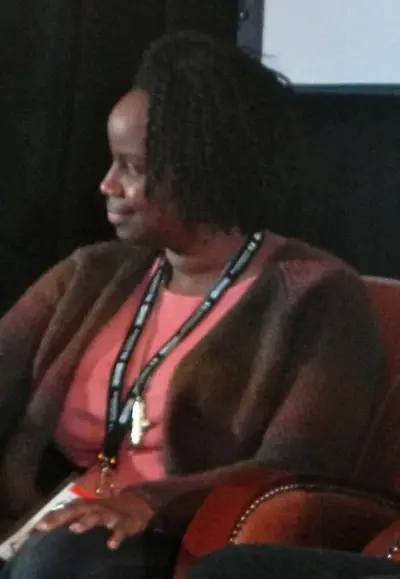
Diandrea Rees is an American screenwriter and director. She is known for her feature films Pariah (2011), Bessie (2015), Mudbound (2017), and The Last Thing He Wanted (2020). Rees has also written and directed episodes for television series including Empire, When We Rise, and Philip K. Dick's Electric Dreams.
