Robert M. La Follette Quotes
I fear that the court has done what the trusts wanted it to do and what Congress has steadily refused to do.
In 1911 the Supreme Court upheld the monopoly conviction of Standard Oil Company but held that the Sherman Antitrust Act only applied to “unreasonable” monopolies and not to monopolies in general.
Robert M. La Follette, 1855-1925, Governor of Wisconsin (Republican), U.S. Senator (Republican, WI), Presidential Candidate (Progressive), 1911
Sourced by: Eigen's Political and Historical Quotations


Then Clarence Thomas replaced Thurgood Marshall on the Supreme Court, there appeared to be a majority of the court that would overturn Roe v. Wade and a woman’s right to an abortion. However it was an election year and the Chief Justice, a Republican, was concerned that if Roe was overturned the electorate might take it out on the Republicans, whose Solicitor Generals had fought to overturn Roe, at the polls. He therefore postponed the hearing of a Pennsylvania case, and then tried to postpone it again till after the election. Blackmun’s memo caused a majority of the court to vote to hear the case with no additional delay. Ironically, by a single vote, Roe was upheld.


The construction and operation of Federal lighthouses and Post Office facilities was accepted, but at the time there were no Federal roads or canals. Some thought that the development of these would be good for the economic development of the country. Jackson and most other politicians could not even conceive of such a thing. However, creative legislators of future generations would create a legal framework for having private, local, state and Federal roads and canals all coexisting. This quotation also dramatically illustrates the problem the Federal Courts would have later when the Constitutionality of Federal Regulations of Billboards on Federal Highways would arise. Not only had the Founding Fathers never conceived of Federal roads, but they never imagined billboards. Yet the Supreme Court had to determine the intent of the Framers regarding billboards on Federal roads.

The “rebate agony” referred to a corrupt practice of the Railroads and the Large Monopolies. The railroads charged a very high rate for the transportation of important products like beef and oil. However, secretly they gave back a large percentage of the transportation rate charged to the trusts. They in turn could cut their prices and undersell all the smaller competitors who were paying “full freight” and could not afford to match the lower price. As soon as the smaller competitors were driven out of business in an area, the trust raised its rates even higher than they charged originally. The Railroad had made a small but reasonable profit on the freight of the trusts but they were guaranteed all their business. They also made huge profits on the higher rates that the small companies paid until those companies were driven out of business. Journalists like Ray Baker and Ida Tarbell had uncovered the rebate scheme which enabled the trusts to steal high amounts from the general public through unreasonably high prices. President Theodore Roosevelt was committed to try and regulate the railroads and not allow rebates but charge the same public rate to all with no rebates. Socialists like Sinclair, thought that this attempt would be hopeless—that the damage had already been done, and the trusts now had so much money that they could buy state legislatures and many in Congress to preserve their dominance.


Synar was one of the members of Congress that finally mounted the first agenda which grew steadily and once the American public realized that cigarettes was by far the largest preventable cause of death of Americans. Even after all the effort and improvement, the tobacco companies facilitated over 300,000 deaths a year. See {637256} for the responsibility of the tobacco companies.


He made this quotation when he was a member of the Wisconsin State legislator. He was describing the influence and interaction that corporations had with the Wisconsin state legislative process.
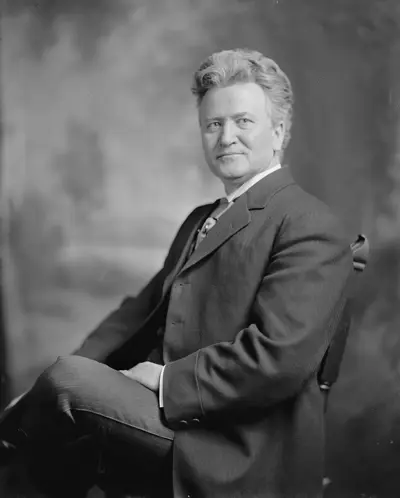
Robert Marion "Fighting Bob" La Follette Sr., was an American lawyer and politician. He represented Wisconsin in both chambers of Congress and served as the Governor of Wisconsin. A Republican for most of his career, he ran for President of the United States as the nominee of his own Progressive Party in the 1924 presidential election. Historian John D. Buenker describes La Follette as "the most celebrated figure in Wisconsin history."
