James Longstreet Quotes
I fancy that no good ideas upon that campaign will be mentioned at any time that did not receive their share of consideration by General Lee.
Longstreet, James. "Lee's Invasion of Pennsylvania." Battles and Leaders of the Civil War, edited by Robert Underwood Johnson and Clarence Clough Buel, vol. 3, The Century Co., 1888, p. 246.


The Civil War produced more deaths than all other American wars put together. Lee’s skill and gentlemanly demeanor subdue the fact that his treasonous efforts caused more American soldiers to die than the entire Second World War—and yet some Americans regard him as a hero while others see him as a traitor.

McClellan liked to parade and drill his troops but not fight them. Lincoln wanted him to take the offensive but the general always found an excuse not to. Many historians believe that McClellan wanted the war to end, the South to rejoin the Union and be allowed to maintain slavery. Others feel that he was just a military man who maintained his popularity by minimizing casualties. Finally, Lincoln fired McLellan and the complexion of the war changed thereafter. McClellan ran against Lincoln for the Presidency in 1864. See {633923}

He was objecting to the current crop of senior military officer who have little experience in fighting and much in academic, strategic and technical training. Many however see him as a dinosaur who does not realized the complex nature of the modern military missions. In general, we have won almost all of our fighting battles but often failed in our maintaining civil society, occupation, nation building, military procurement, preventing sexual assault of our own troops by our own soldiers, assuring mental health of our soldiers. Hackworth, detractors argue, wants to change what already works and ignore what does not.


Candidates are always being asked in the middle of campaigns what they will do if they are defeated.

The Emperor was writing to his son to explain the defeat of Japan. In what was a bit of revisionist history, the Emperor neglected to mention that with the exception of some of the incursions in China, Hirohito had personally approved every Japanese invasion including Pearl Harbor. Further, it was he who had approved the orders that Japanese troops should fight to the death rather than retreat or surrender.
Two days later Lee surrendered at Richmond, and the Civil War was over. On April 14, Lincoln was assassinated. He died the next day.


Attlee was not the first person who observed this phenomenon about peace and war politics but his articulation of it is classic.

Von Stuben brought a formal discipline and organization to the American army and is referred to as “The Father of the U. S. Army.” Beaumarchais was a leading dramatist as well as a secret agent and his communiqués were doubtless the most flowery in the history of espionage and spying.

That is the way he was killed. The phrase, “We are bound to believe that, anyhow” indicates that Stuart really realized how futile the Southern war effort would be but loyalty and patriotism required him to suspend his rational belief structure.
This has been a problem for not only Presidents and Governors, but all managers and administrators. When to terminate a subordinate who is not performing adequately. There is always the chance that the new appointee is no better or possibly even worse.
This is one of the best summaries of Lincoln’s early strategic thinking about the war. Unfortunately for him and the country, his generals were all trained in tactics rather than strategy. And the then modern world placed industry, logistics, and economics on a par with battlefield tactics. Until Generals Grant and Sherman were elevated to higher command, there were no military leaders who thought about the war in overall strategic terms. Lincoln, Grant, and Sherman in a sense created the first strategic approach to modern warfare.
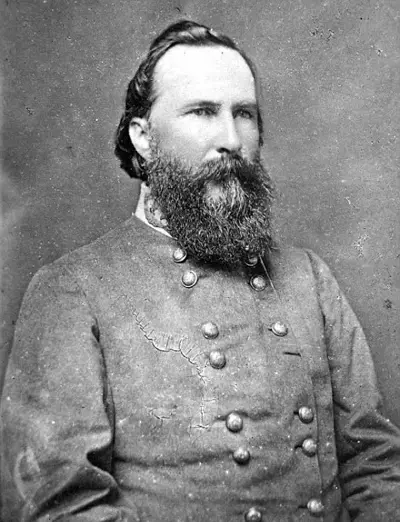
James Longstreet was an American soldier and diplomat. He was one of the foremost Confederate generals of the American Civil War and the principal subordinate to General Robert E. Lee, who called him his "Old War Horse". He served under Lee as a corps commander for most of the battles fought by the Army of Northern Virginia in the Eastern Theater, and briefly with Braxton Bragg in the Army of Tennessee in the Western Theater.
