Andrew Ross Sorkin Quotes
I don't want to put words in Geithner's mouth, but I think he is generally against the revolving door of government officials taking jobs with companies that they have overseen or in roles that involve lobbying. At minimum, I'm pretty sure he felt that way about himself.
Sorkin, Andrew Ross. "Geithner to Wall St.? It's Not About the Money." The New York Times, The New York Times Company, 18 Nov. 2013.


Between the politicians and the financial industry lobbyists the laws are written so that there is sufficient room for enough self dealing so that members of Congress can get rich using methods that are questionable but have been legislated as legal and the Congressional rules have been written so that they are “not unethical”. Many members of Congress leave the institution much wealthier than when they entered but have received salaries that are insufficient to build that kind of wealth. Many then accept lobbying or other jobs at very high pay representing the people and corporations who have been the subjects of their legislative efforts. Other members do not avail themselves of the “legal” self dealing as the practice is not universal.


Trump often used the phrase "Drain the swamp" in his campaigning to mean get ride of the establishment figures who had, for the most part, dominated politics, for decades. When he was elected, he had to appoint a cabinet, but when he did so, it was almost exclusivly made up of people who had been a part of the political and corporate establishment -- the swamp.


While New York City and a few other jurisdictions—states and local—have more stringent laws and ethical standards for politicians than does Congress and Federal Officials, but most have lower standards. In some of the jurisdictions judges can try cases and rule in favor of a company or wealthy individual who gave the judge the money to campaign with and get elected.


The Congressman, who had not been previously an enthusiastic leader for this type of reform, found himself with a chance to become Majority Leader of the House of Representatives. The previous leader was under indictment and was linked, along with other Republican Congressman to a Lobbyist who had pleaded guilty to bribing Congressmen. Another Republican Congressman had plead guilty to the felony of accepting bribes. The party that Controlled Congress was fearful of a voter backlash over the corruption—especially the role of lobbyists in giving money to Congressional campaigns. Bainor became a reform leader.
implicit in the weak ethics rules of the U.S. House of Representatives

Rove had bridged the traditional gap between the right wing Religious fundamentalists and large business, industrial, heavy donors to the party. These groups usually diverged on economic policy and cultural values however Rove had convinced both that they should tolerate the other for the sake of maintaining power for President George W. Bush who delivered enough to each to hold them in coalition. Rove’s style tended to moralize everything for the religious right including their cooperation with major exploiters of economic self-interest. Rove’s religious tactics which were so successful was a subject of great interest and analysis, especially since Rove himself was an agnostic.


Mises is one of the very few economic conservatives who opposed companies getting involved with lobbying or politics in any way. He, like some others, saw the negative public effect that business produces when it does get deeply involved in politics, but he uniquely observed that the businesses themselves suffered as a result of the involvement in politics. Obviously very few business leaders of the 21st century agreed with Mises’ earlier views.


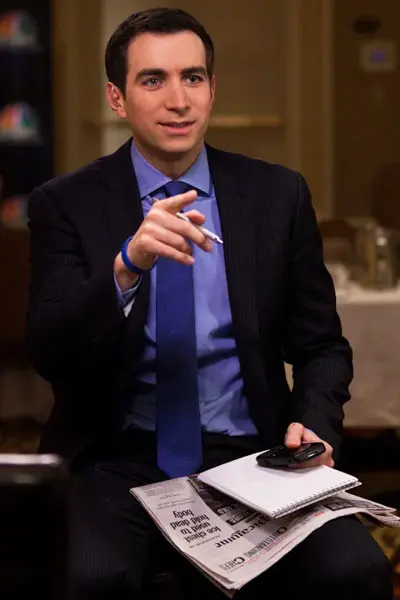
Andrew Ross Sorkin is an American journalist and author. He is a financial columnist for The New York Times and a co-anchor of CNBC's Squawk Box. He is also the founder and editor of DealBook, a financial news service published by The New York Times. He wrote the bestselling book Too Big to Fail and co-produced a movie adaptation of the book for HBO Films. He is also the co-creator for the Showtime series Billions.
