Jill Stein Quotes
For me, the overarching issue here is that we need regulatory agencies that are standing up for us, that do not have a revolving door between, you know, Monsanto, and then suddenly Monsanto lobbyists are in charge of, you know, telling us whether GMOs are, you know, good for our food or not.
Stein, Jill. "I am Jill Stein, Green Party candidate for President of the United States. Ask Me Anything!" Reddit, 20 May 2016.


Between the politicians and the financial industry lobbyists the laws are written so that there is sufficient room for enough self dealing so that members of Congress can get rich using methods that are questionable but have been legislated as legal and the Congressional rules have been written so that they are “not unethical”. Many members of Congress leave the institution much wealthier than when they entered but have received salaries that are insufficient to build that kind of wealth. Many then accept lobbying or other jobs at very high pay representing the people and corporations who have been the subjects of their legislative efforts. Other members do not avail themselves of the “legal” self dealing as the practice is not universal.

This was one of the reasons that President Eisenhower warned about the ‘Military-Industrial Complex. See {641114}.


Rove had bridged the traditional gap between the right wing Religious fundamentalists and large business, industrial, heavy donors to the party. These groups usually diverged on economic policy and cultural values however Rove had convinced both that they should tolerate the other for the sake of maintaining power for President George W. Bush who delivered enough to each to hold them in coalition. Rove’s style tended to moralize everything for the religious right including their cooperation with major exploiters of economic self-interest. Rove’s religious tactics which were so successful was a subject of great interest and analysis, especially since Rove himself was an agnostic.

Chomsky sees this as a problem. Many others see it as a virtue that government agencies receive current information from companies and that there is an exchange of personnel where company officials bring their experience to assist government and corporations benefit from having executives who had some government experience.
The State Department has always been reluctant to have the US Government make an official condemnation of the Turkish. Prior to the end of WWI. Turkey’s Ottoman Empire controlled most of the Middle East which was discovered to be full of oil. Armenia had no oil. The State Department since then (and until the 1970s) it has made it a top priority to advocate for Standard Oil and other American oil companies with the Turks and then the Arabs regardless of the morality of the situation. Despite the fact that virtually every American leader wanted to advocate for the Armenians, the State Department held fast to not
upset Turkey about the Armenian Genocide. Cardashian was the first American who openly stated what the real motivation was. See {638251}, {620602}, {620603}, {620604}, {620605}, and {620606}

While New York City and a few other jurisdictions—states and local—have more stringent laws and ethical standards for politicians than does Congress and Federal Officials, but most have lower standards. In some of the jurisdictions judges can try cases and rule in favor of a company or wealthy individual who gave the judge the money to campaign with and get elected.

Mises is one of the very few economic conservatives who opposed companies getting involved with lobbying or politics in any way. He, like some others, saw the negative public effect that business produces when it does get deeply involved in politics, but he uniquely observed that the businesses themselves suffered as a result of the involvement in politics. Obviously very few business leaders of the 21st century agreed with Mises’ earlier views.

He made this quotation when he was a member of the Wisconsin State legislator. He was describing the influence and interaction that corporations had with the Wisconsin state legislative process.
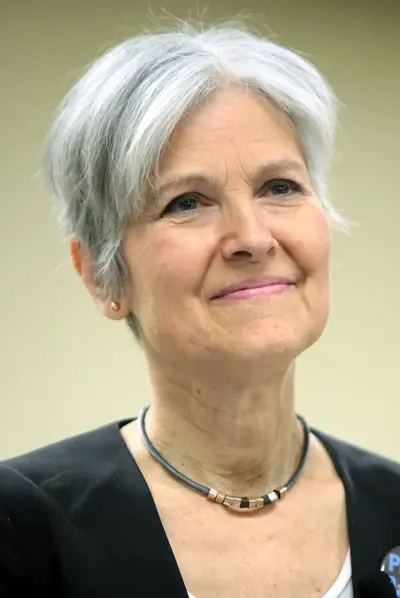
Jill Ellen Stein is an American physician, activist, and former political candidate. She was the Green Party's nominee for President of the United States in the 2012 and 2016 elections and the Green-Rainbow Party's candidate for governor of Massachusetts in 2002 and 2010. During her campaigns for President, she campaigned on the theme of a Green New Deal which included a number of reforms to address climate change, income inequality as well as civil and political rights reform. In 2012, Stein was on the ballot in 37 states and received 469,501 votes (0.36% of the popular vote). In 2016, she was on the ballot in 45 states and received 1,457,216 votes and 1.07% of the popular vote.
