Hjalmar Branting Quotes
I do not overlook the fact that the appearance of these new, free nations in the European political community not only celebrates the return of the prodigal son but also creates new sources of friction here and there.
Branting, Hjalmar. "Fraternity Among Nations." Nobel Lectures, Peace 1901-1925, edited by Frederick W. Haberman, Elsevier Publishing Company, 1972, pp. 325-333.


This is a very important historical and political quotation. First, notice that the Secretary of State was criticizing the policies of his President, a refreshingly honest statement, but one which would never be made after the 1950s. The criticism was not even mild but very heavy. A political opponent could not be more negative. Next consider that while the Secretary of State and almost all the experienced diplomats thought the President foolishly wrong and naive about the practicality of self-determination, by the end of the 20th century, virtually every country in the world, capitalist, communist, secular or religious, wealthy or impoverished, all see self-determination is a basic right of all nations. The President was on the right side of history and all the professional diplomats on most nations were on the wrong side. However, Secretary of Lansing was right about one thing. The quest for self-determination has caused a fearful toll of human lives—not thousands as Lansing predicted but millions. He was also right about another aspect—namely that the unit of self-determination can be confusing and contentious. For example, the French Canadians of Quebec want a great deal of self determination and autonomy, but they do not want to give the same right of self-determination to the Mohawk Indians in Quebec who want to govern themselves. There is a continuous dispute in Turkey where the Kurds claim the right of self-determination within Turkey. Turkey has literally dozens of minority groups. Does self-determination mean that each can have its own nation within what is Turkey. And what about the Native Americans in the United States? Nonetheless, Wilson’s general principle is approved by all while the details are often contentious.

Russia, from the old Soviet Union days, had the only gas pipeline into Lithuania and took advantage of their monopoly by charging the Lithuanians 15 percent more than they charged other European nations where the Russians had some energy competition. The Lithuanians, decided to tie up a very large vessel at an island in their harbor to which Liquid Natural Gas (LGN) could be delivered by ship and converted to gaseous form and piped onto the mainland to provide competition for the Russians. However, the island was a bird sanctuary that was not supposed to be used for anything that might change the ecological balance of the island. This quotation shows that in some circumstances, environmentalists are willing to compromise to balance the benefits and costs.

He was referring to President Jefferson’s inclination to send the military against the Barbary Pirates. They had an incredible extortion racket going in the Mediterranean. If nations would pay them an annual sum each year, they would not attack and seize merchant ships of that country and sell the ships and goods while holding the sailors for ransom. Note that Congress was not very well respected at that time which Jay and most leaders did not think was a good thing, much like in the 21st century.


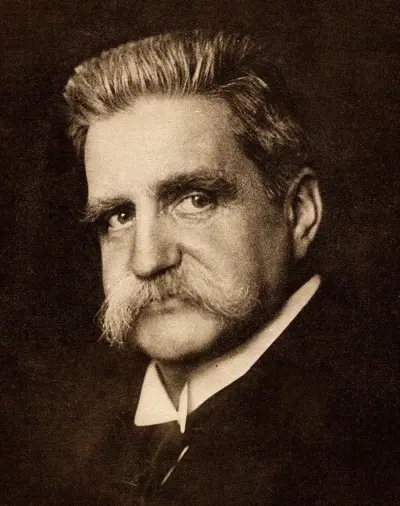
Karl Hjalmar Branting was a Swedish politician who was the leader of the Swedish Social Democratic Party (1907–1925) and Prime Minister during three separate periods (1920, 1921–1923 and 1924–1925). When Branting came to power in 1920, he was the first Social Democratic Prime Minister of Sweden. When taking office for a second term after the general election of 1921, he became the first socialist politician in Europe to do so following elections with universal suffrage. In 1921, Branting shared the Nobel Peace Prize with the Norwegian secretary-general of the Inter-Parliamentary Union Christian Lous Lange.
