Timothy Thomas Fortune Quotes
I do not inveigh against higher education, I simply maintain that the sort of education the colored people of the South stand most in need of, is elementary and industrial. They should be instructed for the work to be done.
Fortune, Timothy Thomas. Black and White: Land, Labor, and Politics in the South. Fords, Howard, & Hulbert, 1884.


profit making schools of higher education The latter years of the 20th century saw a large increase in the number of proprietary, profit making colleges and other institutions of higher education. These were able to utilize the Federal student loan programs. However, many were fraudulent rip-offs. Most were unaccredited. The average proprietary school obtained more federal student loan money per student than non-profit schools {639817}, and did not train their students as well. A smaller percentage of their students get their degrees and find jobs. When they do obtain employment they make less money. Congressional pressure, induced by heavy lobbying, stopped Department of Education efforts to make schools with poor graduation or employment rates ineligible for use of Student Loan Programs.


The government had proposed extending public education beyond age 14, the age at which British business felt that extending public education beyond age 14 would divert too much of the labor force away from work and have a negative effect on the economy. Of course upper class youth stayed in private (called “public” in England) school way beyond age 14. See {46077} for a rebuttal by one of the British economists of the day.


Booker T. Washington was a Black leader who did much for his people, but his objectives were quite limited. He was “the white’s favorite Black man.” Du Bois not only took on the White establishment but the Black establishment as well.

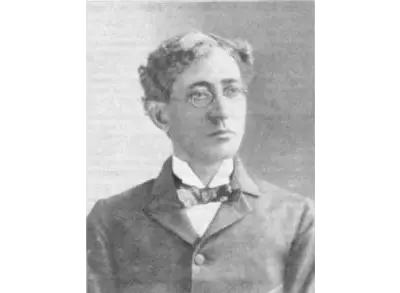
Timothy Thomas Fortune was an American orator, civil rights leader, journalist, writer, editor and publisher. He was the highly influential editor of the nation's leading black newspaper The New York Age and was the leading economist in the black community. He was a long-time adviser to Booker T. Washington and was the editor of Washington's first autobiography, The Story of My Life and Work. Fortune's philosophy of militant agitation on behalf of the rights of black people laid one of the foundations of the Civil Rights Movement.
