Andrew Jackson Quotes
I do not dislike your bank any more than all banks.
Andrew Jackson, 1767-1845, 7th President of the United States (Democrat, TN), Meeting with Nicholas Biddle, head of the Bank of the United States, Fall/Winter 1829-30
Sourced by: Eigen's Political and Historical Quotations


Germany, as one of the wealthier and solvent countries in the Eurozone, as a de facto matter, had to help bail out Ireland when they bailed out the Anglo Irish Bank. See {635440}. This bank was one of many throughout the Common Market and the United States that obtained taxpayer bailouts based on information that was not correct. Merkel observed similarities of banks in the different nations in terms of their honesty, greed, and lack of ethics.


This was in the midst of the debate over The Recharter Of The Bank bill


The savings and loan crises became clear shortly thereafter.

Morgan had arranged to lend the government $36 million in Gold when the national treasury was virtually bankrupt.

During this crises, the taxpayers of America had to bail out most of the largest banks in the country whose profligate investment strategy had squandered their depositors and other customers money as a result of the spiral to reap higher and higher profits until they collapsed with the executives making millions in bonuses when their banks were losing money. They put millions of people out of work, and their greedy policies crashed the housing market and then the same banks evicted millions of families when the banks foreclosed on their mortgages with thousands of bank officers committing felonies in the foreclosure processes. This was to Blankfiein and many of the other leading bankers, “God’s Work”.
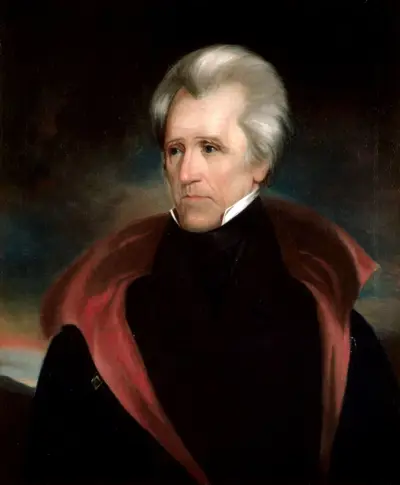
Andrew Jackson was an American lawyer, soldier, and statesman who served as the seventh president of the United States from 1829 to 1837. Before being elected to the presidency, Jackson gained fame as a general in the United States Army and served in both houses of the U.S. Congress. An expansionist president, Jackson sought to advance the rights of the "common man" against a "corrupt aristocracy" and to preserve the Union.
