Harriet Beecher Stowe Quotes
I did not write it. God wrote it. I merely did his dictation.


This quotation illustrates that in the late 19th Century, there were still very prominent American scientists who were Biblical Literalists as well—a virtual intellectual impossibility. Dana was a Yale professor, and yet he rejected Evolution and had the age of the rocks he studied all wrong. At the time, America had only 1 great world class scientist (Physicist Albert A. Michelson) and American Science really became great in the 20th century. Dana was not a total incompetent however. He had amassed vast descriptive knowledge of California and other areas and was at the time considered America’s preeminent Geologist despite his lack of understanding of many fundamental aspects of his own science which was understood by many English and European scientists.

The Creation Museum makes the Christian Fundamentalist Case for their alternative view of the creation of the earth and man. In the process, they make claims that are proven incorrect every day in science, like the earth is only about 6000 years old {641849} , and all the species on earth were then separately created in their immutable form with no evolutionary process. There are many deeply religious Christians who do not take the Bible literally and have no problem with evolution as the mechanism which God selected to create and develop life. The Roman Catholic Church, for example, does not maintain that the Bible is literally true and Evolution did not account for the development of life on earth. The major difference between most modern scientists, philosophers, and theologians, is that some believe that God of other Supreme Being had nothing to do with the evolution and development of life forms and those who believe that Evolution was the mechanism that God created and used. See {641848} for an example of the former.


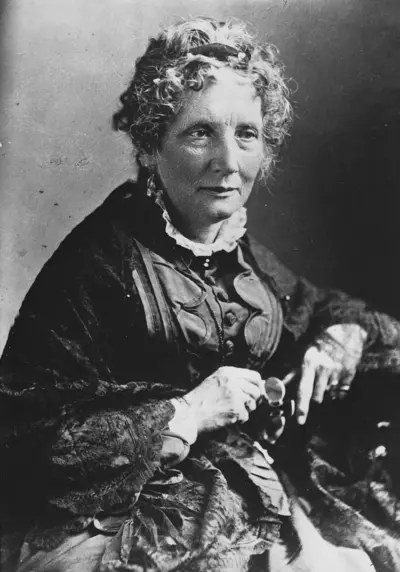
Harriet Elisabeth Beecher Stowe was an American abolitionist and author. She came from the Beecher family, a famous religious family, and is best known for her novel Uncle Tom's Cabin (1852), which depicts the harsh conditions for enslaved African Americans. The book reached millions as a novel and play, and became influential in the United States and Great Britain, energizing anti-slavery forces in the American North, while provoking widespread anger in the South. Stowe wrote 30 books, including novels, three travel memoirs, and collections of articles and letters. She was influential for both her writings and her public stances and debates on social issues of the day.
