W. H. Auden Quotes
I and the public know What all schoolchildren learn, Those to whom evil is done Do evil in return.
Auden, W. H. "September 1, 1939." Another Time, Random House, 1940.


Effective, terse quotation illustrating the research findings that adults who were abused as children tend to become child abusers themselves. Although he was referring to Black parents, the findings have been borne out for all ethnic groups.


This proverb only makes sense in the light of understanding the Arab concept of revenge—“blood.” In a rural desert environment where little can be expected of government, the Arabs have developed a law enforcement and peace keeping mechanism which while primitive from modern standards, nevertheless worked to some degree. It is that revenge—“blood” is a moral necessity and obligation of all people, and revenge is not limited by time or to the individuals involved in the first incidence. The immediate family are the first to exact revenge, but the extended family follows and often the entire clan. Sometimes revenge is tribal or even national. Anyone who fails to revenge a member in his group is not only a disgrace, but is a clear and present danger to the group because then they can be attacked with impunity. So revenge is a strong obligation of the group members and blood must be paid with blood no matter how many generations it may take. The only thing that keeps me and my family safe, is the surety what whosoever kills one of us will themselves be killed or if they die a natural death we will take revenge on one of the evildoers relatives. Crime must never pay!

Darwish’s father, a Colonel in the Egyptian Army, was assigned by Nasser to Direct the Intelligence Operations for the Palestinian Terrorists in Gaza. After many Israelis were killed, the Israeli Defense forces targeted the Colonel and killed him. Nasser’s concept of revenge was to kill any Jews, anywhere, not the Jewish soldiers who had retaliated against his soldiers.


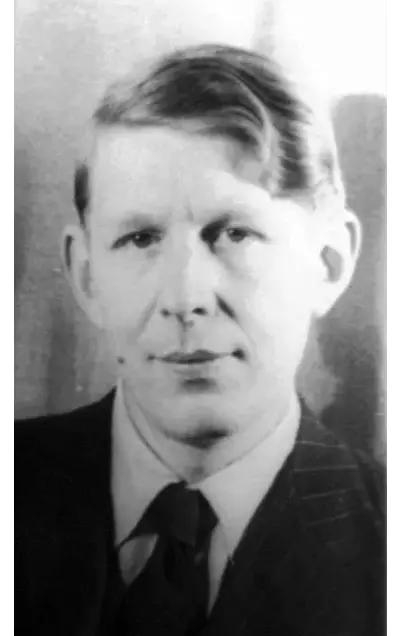
Wystan Hugh Auden was an Anglo-American poet. Auden's poetry was noted for its stylistic and technical achievement, its engagement with politics, morals, love, and religion, and its variety in tone, form, and content. Some of his best known poems are about love, such as "Funeral Blues"; on political and social themes, such as "September 1, 1939" and "The Shield of Achilles"; on cultural and psychological themes, such as The Age of Anxiety; and on religious themes such as "For the Time Being" and "Horae Canonicae".
