Nonie Darwish Quotes
I always blamed Israel for my father's death, because that's what I was taught. I never looked at why Israel killed my father. They killed my father because the Fedayeen were killing Israelis. They killed my father because when I was growing up, we had to recite poetry pledging jihad against Israel. We would have tears in our eyes, pledging that we wanted to die. I speak to people who think there was no terrorism against Israel before the '67 war. How can they deny it? My father died in it.
Darwish’s father, a Colonel in the Egyptian Army, was assigned by Nasser to Direct the Intelligence Operations for the Palestinian Terrorists in Gaza. After many Israelis were killed, the Israeli Defense forces targeted the Colonel and killed him. Nasser’s concept of revenge was to kill any Jews, anywhere, not the Jewish soldiers who had retaliated against his soldiers.
Nonie Darwish, Egyptian Born American Director of Former Muslims United, “Call Me Infidel: An Ex-Muslim Speaks Out". CBN News, March 27, 2007
Sourced by: Eigen's Political and Historical Quotations


Most were tracked down and assassinated by Israeli agents. The mastermind, Abu Daud was seriously wounded but was not attacked again when the Israeli’s and Palestinians began their peace negotiations.

His views are a mix of modernism and fundamentalism. He favors democracy and elections but also favored the Taliban destroying the great ancient Buddha statues when he was called an idol worshipper for urging the preservation of art.

Most sophisticated Muslim theologians would not agree at all with the “permission” he quotes from the Koran. However, there is no hierarchy of belief in Islam and there are tens of thousands of Muslim imams and millions of individual Muslims who believe and teach just what this particular terrorist stated.


She is a leading American Arab who is a Syrian expatriate. The examples she gives in the beginning of the quotations are relatively recent atrocities where Muslims have attacked and brutally murdered other Muslims. She articulates one of the theories to explain the Islamic propensity to brutality and violence that the religion itself, when taught literally which it so often is, actually produces an inclination and glorification of brutal violence and develops a tolerance and acceptance of Islamic violence.

To make matters worse for the Muslims, the tiny foreign entity in their midst—populated by "heathens who do not follow the command of God"—have created a much higher standard of living for their people, improved the land and its productivity in ways that have been far superior to traditional Islamic methods, reclaimed much of the desert that the Muslims could not, and produced a military that has staved off the hostilities of all of Islam, and has done all this without any oil or other natural resources to sell. Israel is a living counter-example to the superiority of Islam and its traditions which is so important to Muslims.

Darwish’s father, a Colonel in the Egyptian Army, was assigned by Nasser to Direct the Intelligence Operations for the Palestinian Terrorists in Gaza. After many Israelis were killed, the Israeli Defense forces targeted the Colonel and killed him. Nasser’s concept of revenge was to kill any Jews, anywhere, not the Jewish soldiers who had retaliated against his soldiers.


This view has had a profound influence on the attitudes and actions of many Israelis in dealing with Arab terrorism. “Proportionate” retaliation is only retaliation and perhaps vengeance, but this doctrine developed out of frustration that little else worked has in many subsequent occasions driven Israeli government defense policy. The Lebanese War of 2006 was perhaps the best illustration.

One of the characteristic of many Muslim leaders is their willingness to sacrifice the lives of their people for political objectives. This has been supported by a willingness of a significant minority of the Muslim population to sacrifice their lives—especially when the leaders have been skilled enough to link their political objectives to the welfare and survival of Islam.

Sudan openly used Islamic terrorists to attack, rape and murder animist and Christian civilians in Darfur. The leaders were wanted for war crimes and openly admitted to many. See {641655}.
He drove a rented SUV into a crowd at a Dining Hall at the University of North Carolina from which he had recently graduated. He was an Iranian-born American citizen who had perceived that American policies and practices abroad led to the death on many Muslims. His interpretation of the Koran agrees with most of the radical, extremist, theologians, but does not comport with the interpretation of moderate Muslim religious thinkers. In 2008, he was convicted and sentenced to 33 years of prison.

In the Asymmetric Warfare the insurgent “wins” a battle by surviving even if the insurgent takes massive casualties. As long as some exist—they can recruit and expand.

The Minister equates the unintended consequences of war and civilian casualties with a terrorist retaliation which has as its purpose the killing of as many civilians as possible. The proliferation of terrorism complicated the ethics of counter terrorism. In the case of Palestinian terrorists their tactics included using civilian facilities---schools, hospitals, homes---from which to launch rocket attacks or to store weapons or hide terrorists. Under international laws of war, a civilian facility and the civilians in it become legitimate military targets the minute that weapons are stored in or fired from that location or that location is used for planning, training, equipping or manufacturing of military material. Palestinian terrorists claim that even though civilians were harmed in legitimate, legal attacks on military targets, a proper response is to send suicide bombers into civilian areas and preparing the explosives with nails and rat poison to cause as much pain as possible.

This quotation is used by the moderate Egyptians and other moderate Arab leaders as well as Israelis and other experts in combating Islamic Fundamentalism to illustrate the thinking process of the Muslim fundamentalist terrorist leader. They are more than willing to sacrifice those they lead (though rarely themselves) if they think that something is to be gained. But if there is nothing to be gained, their “moral” responsibility requires not “wasting” their followers’ lives. Therefore, the way these experts believe they should deal with the radicals is to face them with overwhelming force (a variant of the Powell Doctrine) and never concede anything or let them gain anything from violence. A single concession makes the terrorism, sacrifice and violence worthwhile, but if there is no gain, the leader has wasted the lives of his followers and is less likely to initiate another attack.
In most religions, the clerics generally denounce violence especially where innocent people are involved as do many Islamic clerics throughout the world. However, a very large proportion of the Islamic Clergy not only condones violence but actually urges it and uses their interpretation of religious duty to motivate people in that direction. They tend to drown out the pacifistic Muslim clerics and in some cases they call for their death for heresy, thus intimidating many Islamic moderates.

This characteristic of much of Islam is corroborated by Islamic scholars and politicians. To some, the implication is that it is foolish to negotiate with Muslims over issues that have been classified as jihad. The negotiation is only a sham which will go on until Islam feels strong enough, and then force and violence will be used. While this is historically and culturally true, many Muslims have modernized and see the world in terms of vested interests and negotiated settlements and compromise just like most others. And there have been many non-Islamic ideologues who have also used negotiations and diplomacy as a smokescreen to buy them time to strengthen militarily and then have used force and violence.
This proverb only makes sense in the light of understanding the Arab concept of revenge—“blood.” In a rural desert environment where little can be expected of government, the Arabs have developed a law enforcement and peace keeping mechanism which while primitive from modern standards, nevertheless worked to some degree. It is that revenge—“blood” is a moral necessity and obligation of all people, and revenge is not limited by time or to the individuals involved in the first incidence. The immediate family are the first to exact revenge, but the extended family follows and often the entire clan. Sometimes revenge is tribal or even national. Anyone who fails to revenge a member in his group is not only a disgrace, but is a clear and present danger to the group because then they can be attacked with impunity. So revenge is a strong obligation of the group members and blood must be paid with blood no matter how many generations it may take. The only thing that keeps me and my family safe, is the surety what whosoever kills one of us will themselves be killed or if they die a natural death we will take revenge on one of the evildoers relatives. Crime must never pay!
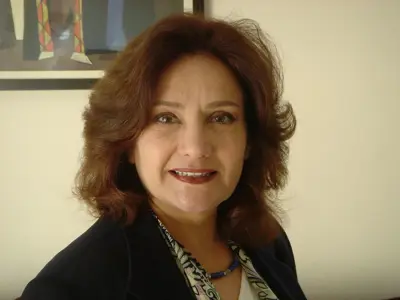
Nonie Darwish (Arabic: نوني درويش; born Nahid Darwish, 1949) is a writer, founder of Arabs for Israel, and is Director of Former Muslims United. Darwish is an outspoken critic of Islam. The Southern Poverty Law Center has described her as an anti-Arab and anti-Muslim activist.
