Andrew Jackson Quotes
I am truly wearied with lounging here; doing nothing but feeding on the public funds—we have really done nothing yet beneficial; and for nine weeks has the House of Representatives been engaged debating the Tariff, that could have been as well decided in two.
Jackson was then a U. S. Senator
Andrew Jackson, 1767-1845, 7th President of the United States (Democrat, TN), Letter to Rachel Donelson Jackson, April 12, 1823
Sourced by: Eigen's Political and Historical Quotations

During a weekly news conference held July 28, 2021, Pelosi was asked to explain why the Biden Administration and Democrats in Congress were pushing for student loan debt forgiveness and cancellation.

What is fascinating about this quotation is that although the head of a religion, Smith was not advocating the kinds of personal lifestyle issues of his church the way modern religious leaders do, but was concerned with the much larger issues of expansionism, corruption of the courts and judiciary, and land distribution. He was a classic reform candidate in that sense. Smith had written to most of the then likely Presidential candidates of both major parties asking for their position on the Mormons who were facing persecution wherever they went. None of the politicians would make any satisfactory commitments. Smith took Direct Action and became the only major religious official to have run for the Presidency of the United States until Pat Robertson tried and failed in 2000. Smith’s assassination shortly thereafter cut his run for the Presidency short before it made much headway and politically he had no chance to affect the race.

In response to Administration tactics to delay a vote on the Church-Cooper proposal to limit American involvement in Cambodia after June 30, 1970, Senator Cotton asserted:


In 2007 the Republicans, who were in the minority, began to use the filibuster to a degree that it had never been used. Within the single year of 2007 Republican’s filibustered 62 times, doubling the highest rate that had occurred before. A small minority of senators were able to block legislation that easily passed the House and was supported by the majority of senators and in some cases supported by the overwhelming majority of the American Public.

In 2010 a number of members of Congress were elected with the support of the Tea Party. Most of these stated publicly that they insisted that the budget should be cut and the deficit be reduced and unless these were done in sufficient satisfaction for them, they would not vote for anything even if it meant closing the government down or defaulting on the national debt. The result was a gridlocked Congress that only 12 percent of Americans thought was competent—the lowest support level since measurements of public support for Congress were made.


While this is a common complaint in the American political dialogue at the beginning of the 21st century, it is interesting that this was the conclusion of a foreign political scholar studying that period—one who was generally a great admirer of America.


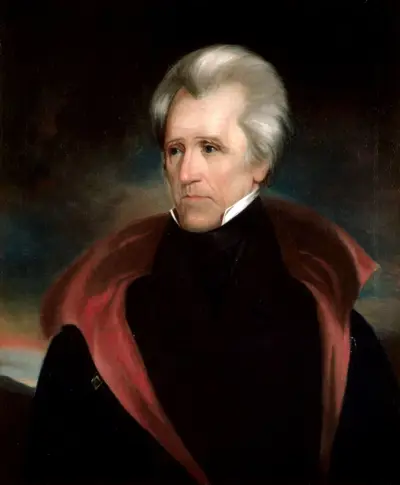
Andrew Jackson was an American lawyer, soldier, and statesman who served as the seventh president of the United States from 1829 to 1837. Before being elected to the presidency, Jackson gained fame as a general in the United States Army and served in both houses of the U.S. Congress. An expansionist president, Jackson sought to advance the rights of the "common man" against a "corrupt aristocracy" and to preserve the Union.
