Norris H. Cotton Quotes
If I have to invade the sacred precincts of the White House to find out what is behind this paralysis of the Senate, I will.
In response to Administration tactics to delay a vote on the Church-Cooper proposal to limit American involvement in Cambodia after June 30, 1970, Senator Cotton asserted:
Norris H. Cotton, 1901-1989, U. S. Congressman & U. S. Senator (Republican, NH), Quoted in his obituary, The Washington Post, February 25, 1989
Sourced by: Eigen's Political and Historical Quotations

His main reason for believing this is that all appropriations bills must be initiated by the House of Representatives. Lobbyists therefore often give the House more attention than the Senate.


The United Stats Senate until the hyperpartisanship and the Republican abuse of the filibuster in the early part of the 21st century, was considered by most, the greatest deliberative body in the world. In just a few years it became one of the most feeble.


Conservatives in the Senate were filibustering the bill at the time.

From this quotation, {624648} and {615902} it is clear that the framers of the Constitution intended the treaty making powers to be shared by the President and the Senate. In practice, in modern times treaties are usually initially negotiated by diplomats under the supervision of the President and the Senate gets to concur or not in the ratification process. However, there have been a number of treaty failures including the League of Nations where the lack of coordination has resulted in a situation where the Senate had to accept or reject something which the President had negotiated and the Senate rejected the treaty.

In 2007 the Republicans, who were in the minority, began to use the filibuster to a degree that it had never been used. Within the single year of 2007 Republican’s filibustered 62 times, doubling the highest rate that had occurred before. A small minority of senators were able to block legislation that easily passed the House and was supported by the majority of senators and in some cases supported by the overwhelming majority of the American Public.


They were discussing the Civil Right Bill of 1964 which they all wanted to pass. See {605438} . However, they faced a filibuster from the Southern Senators who had always before used this tactic and blocked Civil Rights legislation. However, the President here committed himself to the one way to take most of the power out of the filibuster. Accept a shutdown of the Senate, give up the rest of the President’s legislative program but the filibuster blocks all legislation that the Southerners wanted like cotton and tobacco subsidies.


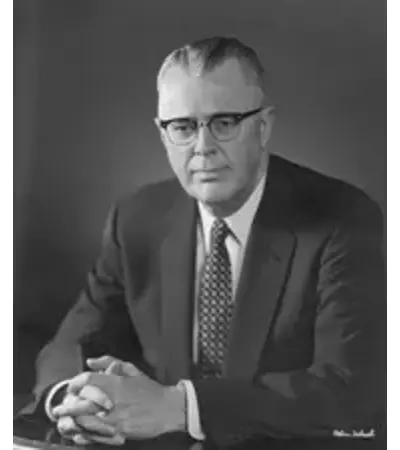
Norris Henry Cotton was an American politician from the state of New Hampshire. A member of the Republican Party, he served as a U.S. Representative and subsequently as a U.S. Senator.
