John F. Kennedy Quotes
I am the Democratic Party's candidate for president who happens also to be a Catholic. I do not speak for my church on public matters - and the church does not speak for me.
Kennedy, John F. "Address to the Greater Houston Ministerial Association." The Speeches of Senator John F. Kennedy, Presidential Campaign of 1960, United States Government Printing Office, 1961, p. 208.


Carroll was writing to Troy during the time of the question of Catholic emancipation in England. Here he is clearly alluding to the British form of government. Carroll never missed the opportunity to champion religious freedom as manifested in the U.S. Constitution. For an earlier example of his praise for religious freedom, see {596933}.

Pen name: Jack Nipps


While the Visigoths had some very advanced legal principles, this law, quoted in its entirety is typical of the nations that were part of the Catholic world. The church and its doctrines were immune from any possible criticism, explicit or implicit. This is the most formalized and sophisticated compendium of laws of the so-called “barbaric peoples” of Europe. The compilation was in many ways a documentation of the traditional laws of the Visigoths that had evolved over hundreds of years.

These were the most terrible and restrictive laws against Jews who would be hunted down and forced to accept Christianity. The Visigothic laws were a combination of Visigothic tradition and the codification by Catholic Clerics. Many scholars have traced the terrible policies and practices against Jews by the Spanish throne and the Inquisition 500 years later to these earlier Spanish Visigoths and their formal legal structure. This is the most formalized and sophisticated compendium of laws of the so-called “barbaric peoples” of Europe. The compilation was in many ways a documentation of the traditional laws of the Visigoths that had evolved over hundreds of years.

While he did not believe that clerics should engage in politics, he did believe that Islamic values and law should be embodied in the nation’s constitution and laws.

There was freedom of religion for Protestants in early New Jersey. Note that Catholics and Jews were not allowed to hold office. This constitution was in force until 1844 when the prohibition was repealed by new constitution. Under the original constitution, men were convicted for blasphemy. See {621063} .

Bulgaria was under the control of the Ottoman Turkish Empire. Levski always made it clear that Muslims were welcome in the Bulgaria that would be created after the Revolution. Most Muslims did not believe him, and many could not understand the concept of a nation without the Sultan who was the political AND religious head of Islam the world over. Essentially for many Muslims there can be no such thing as separation of church and state. To two cannot be distinct.


1st Duke of Wellington. The prohibitions against Catholic participation dated from the time when the Pope and the Vatican tried to support Catholic insurrections in England to return it as a Catholic country which it had been until King Henry VIII had a dispute with the Pope. However, the Catholic attempt to take over England and crush the Protestant Church of England had occurred so long before that there was no practical danger to the then established Church of England. Wellington, an Irish Protestant himself, realized that the law presented no significant protection and caused not only great resentment of English and Irish Catholics, but denied the nation the benefit of their great talents in politics. England took a great step forward and passed the bill.

This is a very important quotation. It is the first American expression of the “wall of separation” concept between church and state.


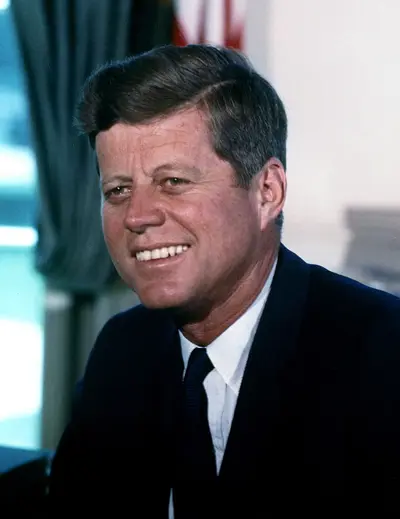
John Fitzgerald Kennedy, often referred to by his initials JFK, was an American politician who served as the 35th president of the United States from 1961 until his assassination in 1963. Kennedy served at the height of the Cold War, and the majority of his work as president concerned relations with the Soviet Union and Cuba. A Democrat, Kennedy represented Massachusetts in both houses of the U.S. Congress prior to becoming president.
