Lee R. Raymond Quotes
I am not a U. S. company and I don’t make decisions on what is good for the United States.
Exxon Mobil is one of America’s largest corporations. It is headquartered in Texas, uses American Government funded research, functions under the protection of the U. S. abroad, benefits from the U. S. Navy keeping the oil sea lanes open and safe, and yet claims no obligation to the condition and future of the United States. It is one of the largest polluters in America and was responsible for the Exxon Valdez destruction of much of Alaska’s shores. And it benefits from special American tax breaks for oil companies, American pipelines and sells much of its products to the U. S. Government. It harasses environmental scientists who document their environmental impact. The company spends more money for lobbying American politicians and gives large donations to politicians and American political parties. Exxon Mobil violates the American Corrupt Practices Act and other American laws. No other large American corporation has taken such an unpatriotic position in modern times. Critics argue that if Foreign Governments are not allowed to donate money to influence American politics, why should this company which by its own admission does not function with American interests in mind.
Lee R. Raymond, Chairman, Exxon Mobil Corporation, Quoted in Steve Coll, Private Empire: Exxon Mobil and American Power, 2012
Sourced by: Eigen's Political and Historical Quotations

This company does not generally worry about any government including that of the United States. See {627132} to learn more about their arrogance and lack of American patriotism.


In one of the most unusual revolutions in world history, Brazil became independent from Portugal via a revolution led by the son of the Portuguese King and heir to the throne, Pedro I. The crown prince of Portugal, led Brazil in her breakaway from Portugal and by popular acclaim became Pedro I, Emperor of Brazil. He is probably the only monarch in history who was the heredity monarch of one kingdom and selected by popular acclaim to the throne of another.


See Carl Schurz {33636} for an 1872 version and G. K Chesterton for perspective {597471}.


This was an old belief amongst the monarchs of Europe. The logic always involved comparisons with the landowners of the kingdom and the peasants or serfs compared with the merchants. The former two groups were tied to the land. The peasant could not afford to go anywhere else and if the landowner did, he lost his wealth. So both groups would support the king and fight off invaders. In contrast, the merchant to some degree had three things, each of which made him able to pick up and go to another land. They often had capital in the form of gold, silver or gemstones, that they could take with them to another country. Then they had inventory of whatever their trade was. This was more difficult to move than gold, but still much more movable than land. Last and most important, they had skills—they could read and write and knew arithmetic, skills which many rich nobles did not have. Even many of the kings were illiterate. Merchants could move to another land and use their skills there. So they were always suspect because they were not tied to the land as much as the others. Also. many merchants traveled abroad and had dealings with foreigners who were always considered potential enemies. So the merchants were all the more suspicious as they communicated with the “foreign enemy”. Immigrants were also suspect as they had family and friends in potentially enemy countries. If the immigrant was a merchant, he was doubly suspect. Jews were in many counties legally barred from owning land or practicing a profession, so many became merchants. Then they did not have the same degree of loyalty to the land and the rulers. This was one of the reasons for the anti-Semitism of the time.


General Motors in Germany had started manufacturing trucks for the Nazi regime. Ford also was building dual use—military and civilian—vehicles. A number of American corporations, with World War II having started in Europe, owned subsidiaries in Nazi Germany which under Nazi laws and regulations were required to produce products for the Nazi government. IBM machines were being used to keep track of all the anti-Nazis, Jews and other perceived “enemies”. Nazi contracts were very profitable and most American firms in Germany just closed their eyes to what the Nazi regime was doing and even fired their Jewish workers rather than close down their German factories. With this horrible experience with large corporations helping what was to be our enemy, after WW2 Congress passed legislation which allows the President to make it illegal for American firms to trade with, manufacture in, or provide technical assistance to Countries that are potential enemies.

Brightstar, owned by Sprint, had 70 percent of the Venezuelan cell telephone market when leftist and anti-American Hugo Chavez was the President of Venezuela. The company served it’s Venezuelan customers well at competitive prices and created many jobs at all levels for Venezuelans. Chavez allowed them to stay in the market.


Conservatives generally do not have a problem with the businesses of the country exercising a great deal of control over the government, but the left wing usually does. However, when it is multinational corporations that pressure the government, then nationalist conservatives are distressed and join with the left lest “foreigners” control things rather than their own rich people.
The railroads were nationalized for WWI and he ran them all as a government official

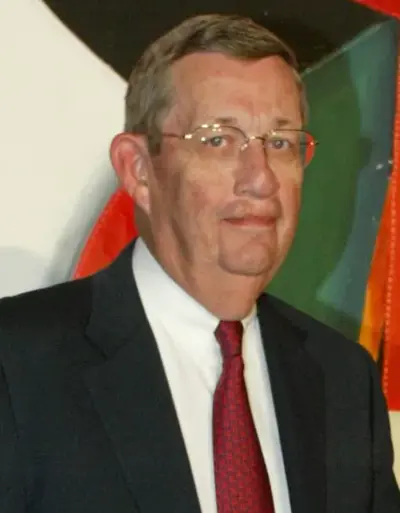
- Born: August 13, 1938
- Nationality: American
- Profession: Former Chairman & CEO, Exxon Mobil
Lee R. Raymond is an American businessman and the chief executive officer (CEO) and chairman of ExxonMobil from 1999 to 2005. He had previously been the CEO of Exxon since 1993. He joined the company in 1963 and served as president from 1987 and a director beginning in 1984.
