John Tyler Quotes
I am charged with violating pledges which I never gave; and because I execute what I believe to be the law, with usurping powers not conferred by law; and above all, with using the powers conferred upon the President by the Constitution, from corrupt motives and for unwarrantable ends.
Tyler, John. "Protest." 30 Aug. 1842. A Compilation of the Messages and Papers of the Presidents, edited by James D. Richardson, vol. 4, Bureau of National Literature, 1897, p. 191.

by having their pay eliminated Prior to the American Revolution, the Anglican Church was the official church of Virginia; its ministers were paid by the state and this practice was under debate.


The convention turned down the constitution and would not ratify it until the Bill of Rights was passed later.

The original proposal made treason and bribery the only grounds for Presidential impeachment. Mason and others argued to broaden the grounds and finally they agreed on “high crimes and misdemeanors.”


The United States government had for many years deposited all its funds in a single private bank, the Bank of the United States. In 1833, President Andrew Jackson, without any congressional authorization, ordered the federal deposits to be distributed among state banks instead. The Senate was furious and passed the first resolution of censure of a President in United States history:. Carried by a vote of 26 to 20. Four years later a pro-Jackson Senate majority voted to expunge the resolution.


President George W. Bush had ignored a federal law and tapped the phones of Americans without probable cause and a warrant issued by a court. The President’s defenders argued that the President, as Commander in Chief, has the Constitutional responsibility to lead the military and protect the nation. Intelligence gathering is part of military activity. Therefore the intelligence gathering is a Constitutional duty and the Congress, under the separation of powers doctrine, may not interfere with the President’s Constitutional Duty to conduct intelligence. Under this doctrine, the President need not obey laws that he believes impinge on his management of the war effort and the defense of the nation. Most legal scholars believe that this argument is nonsense, but the George W. Bush administration has stated the doctrine and it was the subject of much litigation.

The Senator had introduced an amendment that would prohibit the President from attempting to influence members of Congress. It failed.


On the Fugitive Slave Act: As one of the leading American Catholic intellectuals during the 19th Century, Brownson’s opinions went far in keeping Catholics from joining the side of the abolitionists. However, just a few years later his tone would change and he would become one of the few Catholic writers to refuse to defend slavery, see {610710}. While the majority of Catholics refused to join the abolition movement, they often did so because abolitionism was closely tied to anti-Catholicism, see Gordon {611392} or Shaftesbury {611106}. Other reasons included Irish immigrants fearful of competition from Black labor and the fear of liberal individualism and social disorder, which was prevalent in 19th century Catholic thought. For a further explanation on the relationship between American Catholics and slavery, see McGreevy {612036}.

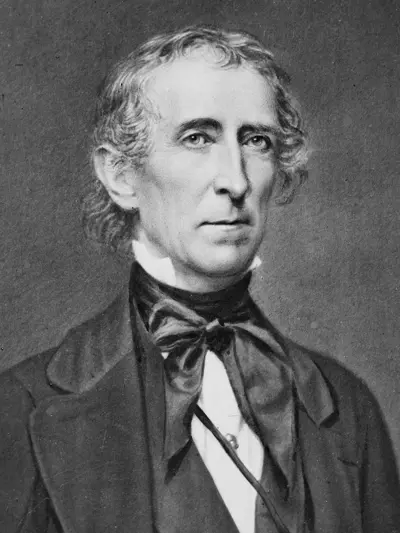
John Tyler was the tenth president of the United States, holding office from 1841 to 1845 after briefly serving as the tenth vice president in 1841; he was elected vice president on the 1840 Whig ticket with President William Henry Harrison. Tyler ascended to the presidency after Harrison's death in April 1841, only a month after the start of the new administration. He was a stalwart supporter and advocate of states' rights, and he adopted nationalistic policies as president only when they did not infringe on the powers of the states. His unexpected rise to the presidency posed a threat to the presidential ambitions of Henry Clay and other politicians, and left Tyler estranged from both major political parties.
