Janeane Garofalo Quotes
How is it that this debate has been twisted on its head, that somehow those that advocate peace and diplomacy are anti-American?
Garofalo, Janeane. Interview. Late Edition with Wolf Blitzer. CNN, 23 Feb. 2003.


Kennan was talking about the Russians, but the same principle seems to hold with any autocratic government and in some cases even democracies. However, the tradition of secret diplomacy with no transparency is established even in many democracies. Great Britain and France, for example conduct most of their diplomacy in secret as do less democratic governments and tyrannies. They expect us to keep negotiations confidential, which causes American diplomats to be torn between the American view of transparency and the tradition of confidentiality.


FDR was hoping to defeat or at least stop Hitler and Germany by arming England and Russia and thus avoid having American troops committed. However. when the Japanese launched their sneak attack on Pearl Harbor, Hitler immediately declared war on the United States, and our troops were suddenly in a two continent war.

Iraq’s program of mass destruction weapons development

2nd Viscount Melbourne. The “American treaty” was the Webster–Ashburton Treaty to adjust the final borders between Canada and the United States that were still in dispute from the War of 1812. Note that the British Prime Minister was critical of the position that was being taken be some British diplomats. In many American negotiations with Russia and others, there are hard liners who believe that the negotiators want too much to preserve peace and are not sufficiently willing to go to war for the nation’s principles and honor. As this quotation shows, this is not just an American phenomenon, but in almost all nations there are hard liners critical of all international negotiations and fearing that a desire for an agreement will undermine the positions that should be taken. This is an example where the hard liners were on the non American side.

This is an interesting historical quotation because it shows the role of the Queen in the English Government at the middle of the 19th century. What the quotation shows is that the drafts of significant foreign policies were sent to the young 29 year old Queen for approval. However, her review was not perfunctory, In {630732} it showed how she analyzed proposed policies and pointed out flaws and shortcomings. In this quotation she not only criticized a part of the draft policy but actually wrote her own copy to be included. War was then raging in Lombardy between the Austrians under Marshal Radetzky and the Piedmontese under the King of Sardinia and she believed the Palmerston draft did not do enough to make the Austrians see England as an objective party. And she wanted to be much more proactive and have the British Foreign Ministry mediate the conflict. This would be like a President of the United States taking a draft of a foreign policy from the State Department, instead of either approving or disapproving it, redrafts it to add some additional elements and make the language more comfortable for the parties. And she did this when by U. S. standards she was not old enough to even run for Congress. (And women in the United Kingdom could not even vote.) Note that the formality of the time required that the Queen refer to herself in the third person and not the first.

When there is a serious problem with another country and it appears that military force may have to be used, he and most sophisticated policy makers argue that we should always try diplomacy first. If that does not work, then the military option is still open. If it does work, war or other military action is always available as an option. When politicians do not want to try diplomacy, it is usually that they have an ulterior motive for war and/or military force. Some urge caution with this principle in all cases as sometimes it gives the enemy time to regroup and rearm and he gets stronger by stringing out the negotiations with no intention of a diplomatic solution. In some other cases, as Iran in the second decade of the 21st century when they were suspected of developing a nuclear weapon. The Israeli right wing and some American conservatives wanted no delay in use of military force as that might allow the Iranians to complete an operational message. President Obama and most Americans favored strong economic sanctions with diplomacy first.


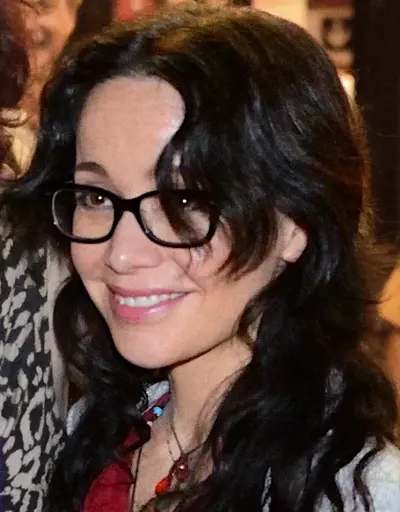
Janeane Marie Garofalo is an American stand-up comedian, actress and writer. Garofalo began her career as a stand-up comedian and became a cast member on The Ben Stiller Show, The Larry Sanders Show, and Saturday Night Live, then appeared in more than 50 movies, with leading or major roles in The Truth About Cats and Dogs, Wet Hot American Summer, The Matchmaker, Reality Bites, Steal This Movie!, Clay Pigeons, Sweethearts, Mystery Men, The Minus Man, and The Independent, among numerous others. She has been a series regular on television programs such as Wet Hot American Summer: First Day of Camp, 24, and Girlfriends' Guide to Divorce. Garofalo is an outspoken progressive activist. From March 2004 to July 2006, she hosted Air America Radio's The Majority Report with Sam Seder.
