Amy Chua Quotes
How can you ever ensure that you will get a beneficent dictator?
The example that is often given is Singapore of the late 20th century.
Amy L. Chua, Attorney, Political Scientist, & Writer, Expressing opposition to the idea of a multi-ethnic nation having a beneficent dictator until people learn tolerance, Interview, NBC John McLaughlin's One On One, July 29, 2007
Sourced by: Eigen's Political and Historical Quotations


McClellan thought President Lincoln an oaf and toyed with the idea of taking over. Ironically, he was a terrible battle general and never would have any reasonable success on the battlefield.

FDR was a marvelous judge of men and their character. De Gaulle could not separate himself from France and pushed the French Republic towards one man rule (himself) as much as anyone since Napoleon Bonaparte.


Porfirio Diaz - the longtime dictator of Mexico stole the election of 1910 and had his opponent Francisco Madero arrested and imprisoned. Madero got out, crossed the border to San Antonio, and issued this declaration which started the Mexican Revolution. See {613620} for the statement that declared the Revolution.

With so many revolutionary rulers of new nations suppressing all opposition, the history of Ataturk and Turkey is unique. Ataturk was so popular and his People’s Party so successful that there was no opposition and Turkey had one party rule. However, Ataturk was determined to have Turkey become a parliamentary democracy as good as the Western nations of Europe. So a tradition of multi-party democracy was needed. So Ataturk actually went to his friend Fethi Okyar and asked him to start an opposition party and oppose the government. Fethi was a strong supporter of the revolution and generally was in concurrence with Ataturk and the People’s Party on everything. Ataturk however convinced him that they had to start a tradition that would take Turkey through the future, and he did create a new party-- Serbest Cumhuriyet Fırkası (Liberal Republican Party) and worked hard to find differences with the People’s Party and the Government. One immediate contribution was the oversight that the new party provided—a strong tradition that exists to this day in Turkey.

At the time of this statement most people thought that Bush was joking. But by the end of his Presidency many looked back on the quote and thought that Bush had such preferences. He unilaterally took the country into the Iraq War and assumed Presidential Powers that no other president had ever attempted. Most serious, his administration actually took the formal legal position that the President did not have to obey the law if he unilaterally thought that it was not in the nation’s interest from the point of view of the Commander in Chief. So many debate whether this quotation was a light hearted joke of a harbinger of his real feelings about the Presidency.


Soon he had the power of a dictator but he didn’t force his will on the vast majority of the Cubans. His decrees made all the wealthy and the cronies of the dictator Batista outraged and most of them left Cuba. He was a dynamic demagogue and the people handed him dictatorial powers which he did not reject. He was so popular that he was the only leader in the Americas who would give 4 hour speeches and move through the streets without any bodyguards until the United States and dissident expatriates tried to assassinate him. With all that popularity, none the less he would not allow open criticism of his regime and jailed many political opponents. So he indeed became a dictator but never needed the machine gun to maintain power.


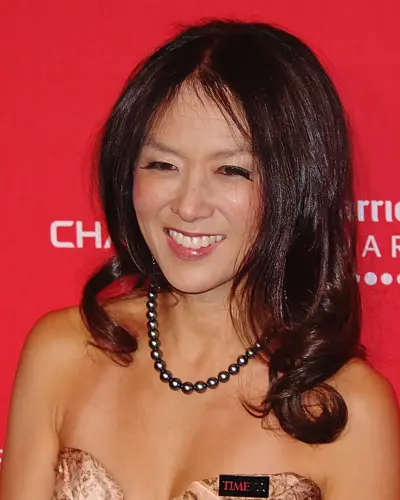
Amy Lynn Chua is an American law professor and writer. She is the John M. Duff Jr. Professor of Law at Yale Law School. Her expertise is in international business transactions, law and development, ethnic conflict, and globalization and the law. She joined the Yale faculty in 2001 after teaching at Duke Law School for seven years. Prior to starting her teaching career, she was a corporate law associate at Cleary, Gottlieb, Steen & Hamilton. She is also known for her parenting memoir Battle Hymn of the Tiger Mother. In 2011, she was named one of Time magazine's 100 most influential people, one of The Atlantic’s Brave Thinkers, and one of Foreign Policy’s Global Thinkers.
