Herodotus Quotes
How can a monarchy be a suitable thing, which allows a man to do as he pleases with none to hold him to account. And even if you were to take the best man on earth, and put him into a monarchy, you put outside him the thoughts that usually guide him.
Herodotus. The Histories. Translated by Aubrey de Sélincourt, Penguin Books, 2003, p. 203.


In 1993 the President left Russia at a time of political turmoil to attend a critical summit conference with the United States.

Tonga was one of the few nations controlled by a king.


Typical of the times, the king was accountable to no one for anything. 200 years later, most of the world have accepted the principle that no one is above the law and that every leader is accountable to the people.


There was a rumor that Napoleon BonaparteII, Emperor of the French, was seriously ill, and when asked what the complaint was, a distinguished foreign guest remarked:


Province of the Congo. Both the British and the Belgians were vying for Katanga to become a part of their empire. Msri, a cruel tyrant, was hated by his people, many of whom he had had murdered.

Nasir Khusaro Hamiduddin Abu Muin Nasir bin Khusaro bin Harith al-Qubandiyani

After the King’s appointment in 1921 she “advised” him on establishing this regime and operating the government. At a time that women could not even vote in England, Bell was a kingmaker and major power in an area of the world that was much more sexist than England at the time.

Bartolo was the most famous legal expert of his day and for many years thereafter as he died at the age of 44—the height of his career. In Italy, Spain and other nations of Europe there were statutes passed that said if there was no precedent in Roman Law, the writings of Bartolo should dictate the law.

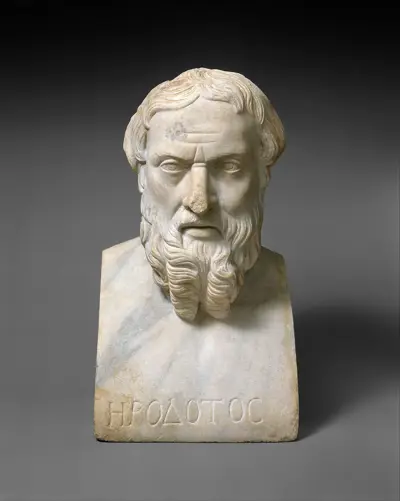
Herodotus (/hɪˈrɒdətəs/; Ancient Greek: Ἡρόδοτος, Hēródotos, Attic Greek pronunciation: [hɛː.ró.do.tos]; c. 484 – c. 425 BC) was an ancient Greek historian who was born in Halicarnassus in the Persian Empire (modern-day Bodrum, Turkey). He is known for having written the book The Histories (Ancient Greek: Ἱστορίαι Historíai), a detailed record of his "inquiry" (Ancient Greek: ἱστορία historía) on the origins of the Greco-Persian Wars. He is widely considered to have been the first writer to have treated historical subjects using a method of systematic investigation specifically, by collecting his materials and then critically arranging them into a historiographic narrative. On account of this, he is often referred to as "The Father of History," a title first conferred on him by the first-century BC Roman orator Cicero.
