Daniel Webster Quotes
He who tampers with the currency robs labor of its bread.
Webster, Daniel. "Mass Meeting at Saratoga." The Works of Daniel Webster, Vol. 2, Charles C. Little and James Brown, 1851, p. 25.


This is not a common quotation from Thoreau. The great man for whom the establishment had so much respect had a very anti-capitalist streak. His view is that the employer will generally never pay his laborers a fair wage. Instead he will pay the laborer the lowest rate for which he can obtain the laborers services. If the laborer generates added value for his wage, the employer is in a zero sum game with the laborer. If part of the added value—the profit is paid to the laborer, the employer does not have it for himself (or his stockholders). In most cases, the laborer is forced to work for his and his family’s subsistence. This theory argues that they only way the laborer will get a fair wage is if there is a labor shortage (assuming no government laws or union pressure is in the picture. Many capitalists argue that a “fair” wage is what a free man is willing to work for and a free employer is willing to pay. So economics is like politics in general with respect to fairness—there is no universally accepted definition of what is fair.


In his economic view, managers, accountants, attorneys, owners, shareholders, landlords, were all supported by the workers who have to support themselves and all the others.


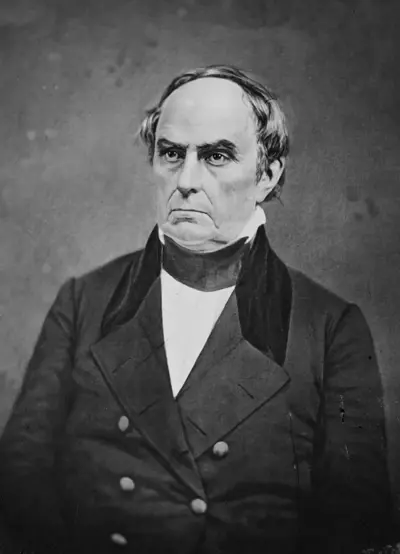
Daniel Webster was an American lawyer and statesman who represented New Hampshire and Massachusetts in the U.S. Congress and served as the U.S. Secretary of State under Presidents William Henry Harrison, John Tyler, and Millard Fillmore. As one of the most prominent American lawyers of the 19th century, he argued over 200 cases before the U.S. Supreme Court between 1814 and his death in 1852. During his life, he was a member of the Federalist Party, the National Republican Party, and the Whig Party.
