Niccolo Machiavelli Quotes
He who has annexed them, if he wishes to hold them, has only to bear in mind two considerations: the one, that the family of their former lord is extinguished; the other, that neither their laws nor their taxes are altered, so that in a very short time they will become entirely one body with the old principality.
Machiavelli, Niccolò. The Prince. Translated by W. K. Marriott, J. M. Dent & Sons, 1908, p. 14.


This is one of the earliest conceptions of a European Community. It is not known whether he was referring to Europe including England or continental Europe only without England.

Many historians would argue that it was the party governments that caused most of the downfall of failed republics and individual dictators then stepped in and took over the failure in process.

Literally the word means “living room” but was an intellectual doctrine which essentially said that Germany, in order to survive as a major civilized society, was justified in conquering the lands of its neighbors—especially those areas which had traditionally ethnic German populations. This conquest would give the German “master race room to expand.

The previous year the Japanese had committed to maintaining the independence of Korea. ({613110}). The Japanese then abrogated their treaty, forced Sunjong to abdicate, assassinated his wife, and annexed the country.


Between a purchase of lands from the Hudson's Bay Corporation and land grants, Canada annexed millions of acres of land without much political activity or any assent from the people who lived on those lands.


America had declared war on Mexico and President Polk had designs on California and other territory.


Mexico was in a chaotic state with the central government not able to control the countries, especially in the North. There were numerous American proposals like this one. See {596782}.

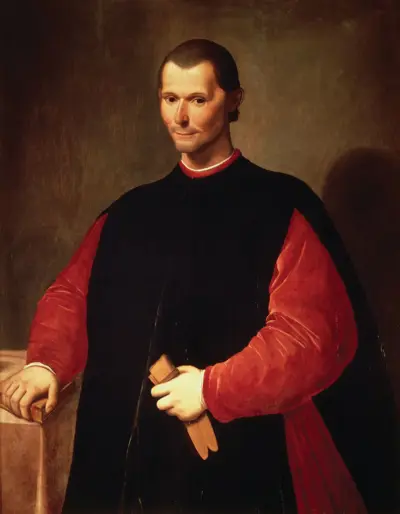
Niccolò di Bernardo dei Machiavelli was an Italian Renaissance diplomat, philosopher and writer, best known for The Prince (Il Principe), written in 1513. He has often been called the father of modern political philosophy and political science.
