Anna Comnena Quotes
He heard a report of the approach of innumerable Frankish armies. Now he dreaded their arrival for he knew their irresistible manner of attack, their unstable and mobile character and all the peculiar natural and concomitant characteristics which the Frank retains throughout; and he also knew that they were always agape for money, and seemed to disregard their truces readily for any reason that cropped up…. The Latin race is always very fond of money, but more especially when it is bent on raiding a country ; it then loses its reason and gets beyond control.
The Franks on the First Crusade, had a terrible reputation for greed and rapine amongst the Muslims. But it was equally shared by many of the Christians. Comnena was one of the Christian writers to reveal their atrocities and other dishonorable characteristics. To this day, there are some Muslim terrorists who justify their modern atrocities as retaliation and vengeance for the behavior of the Christians during the Crusades.
Anna Comnena, 1083-1153, Byzantine Princess of Constantinople & Historian, Eldest Daughter of Emperor Alexius Comnenus, The First Female Historian of Note, The Alexiad, Book X, ~1148
Sourced by: Eigen's Political and Historical Quotations

14 Arab Armies in a coordinated attack on the 1 day old Israeli state, intended to massacre all the Israelis as demonstrated by this quote. Note that this kind of extermnination intent was advertised with pride. To everyone's surprised, the Jewish defenders not only beat back the viscious attacks but enlssarged their terroitory by capturing strategic sites from which the attacks had been launched. Many people credit to the Israely victory to the fact that they were litterally fighting for their lives. Defeat would have meant death for them and their families. The Arab armies, in contrast, were fighting for land that other Arabs claimed that should have been theirs. The willingness to stand and fight for this goal did not match the self preservation that motivated the Israelis--especially in the aftermath of the Holocaust killing 6 million Jews in WWII.
There are some who argue that the quotation was made earlier and was not meant as an incendary call for massacre of Israelis. It well may be that in his original thinking, he was predicting what would happen if the State of Israel was created, basing his thoughts on historical artrocieties of the past. And many think he was concerned about that possible outcome and was trying to avoid it. The import of the quotation was not necessaruly to hisltorically blame Assam for the point of view but to simply establish that there were many Arab voices calling for victories of history where there were massacres in the Middle East. And there were those who took Azzam's quotation and broadcasted it on Arab radio, calling for the very massacre that Assam may have been warning about. Note that this notion of Jewish massacre and extermination was also picked up 60 years later and called for by the President of Iran.
The Christian Crusaders had captured Jerusalem and slaughtered the Muslim civilian inhabitants. In the 21st century, some Islamic terrorists justified the beheading of captured Christian prisoners as revenge for this massive Christian beheading of Muslims almost 1,000 years earlier.
Ever since the world dominance by the Judeo-Christian West, any military of physical victory of Muslims over Christians was considered symbolically very important by Islamic leaders.

This verse is often cited by Muslim scholars who are defending against the claim that The Koran teaches violence against non-Muslims. In this case, the Jews are admonished to kill their defeated enemies. Today many Muslims claim that Jews and Christians who believe in the Old Testament believe that the violence was justified because it was ordered by God. Therefore when God orders Muslims to kill idolaters and other enemies, it is the same thing and not reprehensible.
The juxtaposition of scenes of murder and brutality together with God and holy purposes seems foreign to us today. It is extant among some Islamic groups who exult in similar scenes while calling to God. This “barbarity” is historically not just Islamic but was typical of Christians as well. Beheading was common in the Crusades, and it is still popular among some of the Islamic extremists who look to the “old days” as a model for them today.
Ariel Sharon, before he became Israeli Prime Minister was an Army General, who led the attack on the Palestinian PLO terrorists in Southern Lebanon. He had made an alliance with the Lebanese Christian Phalangists who had been brutalized and many had been murdered by the PLO militants who operated out of the Sabra and Shatila Beirut refugee camps where the terrorists had a safe haven and their PLO headquarters in Shatila. Israeli troops under Sharon had reached Beirut, and then the Phalangists attacked the two refugee camps where they had scores to settle and sought revenge. Somewhere between 700 and 3500 Palestinians were killed. Most of them were civilians (according to the Palestinians) or terrorist fighters (according to the Phalangists). Sharon was faulted by many for the deaths; these critics observe that Sharon, as the victorious military power in the area was responsible according to the rules of war for the safety of all civilians in the area. He commanded the strongest military in the area and he allowed or did not stop the Phalangists who were exacting their revenge. Therefore some accused him of war crimes. There was also an Italian military peacekeeping contingent in the camps but they chose not to intervene.

In the 18th Century, the Islamic Barbary States combined their religious beliefs for Jihad against non-believers with a classic criminal enterprise--piracy. They would authorize corsairs to outfit ships and attack Christian merchant ships on the high seas. They would capture the ship and the cargo, which would be split with the ruler of the country. The crew and passengers would by “rented out” as slaves until they would be ransomed, the proceeds of which would also be shared. To motivate a larger ransom, the captives were regularly tortured as well as worked almost to death. The Barbary Pirates encouraged the “slaves” to write to their relatives, friends and governments to try and raise the ransom. Individual Christian countries were offered a “treaty” whereby for an annual payment of tribute to the Barbary country, the corsairs of that country would not attack ships flying the flag of the country that paid the tribute. The Christian country had to make 4 different tribute payments to each of the 4 Barbary nations. Most of the European powers were paying the tribute even though some could easily defeat the Corsair navies in a war. The cost of outfitting a fleet for war was much more greater than paying the tribute. The new nation of the United States was good pickings for the Barbary pirates and there was a period of several decades where the Americans had to create a policy to pay tribute or go to war. At different times America did both. Jefferson argued for War rather than pay the blackmail tribute.

While saying this, he even patted the young boy prisoner on the cheek. The young boy even thanked him. Within the next 10 days, under Mladic’s orders, 8000 Muslim Bosnian men and boy prisoners, including the this young boy were massacred.
This was part of the continual conflict between the Muslims and the Eastern Orthodox Christians. The Greeks ended up doubling their territory.
Greece had always coveted Anatolia which was a part of the Ottoman Empire but had been in antiquity a Greek dominated area. Further, people of Greek ethnicity and culture, who hundreds of years ago used to be the vast majority were, after the hundreds of years of Ottoman rule and migration, were then the largest minority in Anatolia. The Turks lost the First World War as a consequence of their allying with Germany, and had been stripped of their vast Arab territories. Also, Turkey had just undergone a revolution and the old order was displaced. Greek Nationalist Prime Minister Venizelos saw this as an opportunity to get back Anatolia and sent a military invasion force to land at Smyrna (Ismir to the Turks), the largest city of Anatolia where despite the Greek minority in all of Anatolia, Greeks were a small majority in Smyrna. The invasion was initially successful but was then repulsed by the Turk revolutionists lead by their great patriot Ataturk who counterattacked and defeated the Greek forces handily despite the fact that they were hastily organized, untrained together, and much more poorly equipped than the Greeks. However, the Greeks in their retreat, followed a scorched earth policy and as this quotation shows, committed many atrocities against the Turkish civilian villages.


She is a leading American Arab who is a Syrian expatriate. The examples she gives in the beginning of the quotations are relatively recent atrocities where Muslims have attacked and brutally murdered other Muslims. She articulates one of the theories to explain the Islamic propensity to brutality and violence that the religion itself, when taught literally which it so often is, actually produces an inclination and glorification of brutal violence and develops a tolerance and acceptance of Islamic violence.

Just like Spain and Persia, the Arabs by fighting lost not only more land, but also lost the respect of most of the non-Muslim War. The conscious decision to choose an irrational strategy that would cause loss of life, land and respect has none-the-less repeatedly been chosen by the Arab culture. much to its detriment. Azzam is one of the few Arabs to admit this to the non-Islamic World.
The Muslims had internal wars but they had—and still have--two sets of morality as to the laws of war. This illustrates the classic Islamic discrimination against non-believers to which the minority of Muslim terrorists still adhere,


The Christian Crusaders were considered particularly cruel and barbarous by the Muslims who themselves were quite barbarous. To this day, Middle Eastern Muslim parents who want to frighten little children threaten them that the “Crusaders” will come—“Crusader” has the connotation of “monster”.

Some southerners had gotten out of the Confederate chain of command and were attacking civilian steamboats killing Southerners as well as “Yankees”. See {633900} . While Sherman had trouble with some of his own men on parts of his March Through Georgia, at this time, it was Southerners who were acting independently and improperly. Legally, the Confederates were responsible for any people committing terror. Sherman tried to persuade the Confederate commanders with letters like this, but was very quick to retaliate for every violation. He also complained to some Union officers that they were not moving quickly enough to retaliate and prevent future behavior--{584048}

Greece had always coveted Anatolia which was a part of the Ottoman Empire but had been in antiquity a Greek dominated area. Further, people of Greek ethnicity and culture, who hundreds of years ago use to be the vast majority were after the hundreds of years of Ottoman rule and migration were then the largest minority in Anatolia. After the Turks lost the First World War as a consequence of their allying with Germany, and had been stripped of its Arab territories. Also, Turkey had just undergone a revolution and the old order was displaced. Venizelos saw this as an opportunity to get back Anatolia and sent a military invasion force to land at Smyrna (Ismir to the Turks), the largest city of Anatolia where despite the Greek minority in all of Anatolia, Greeks were a small majority in Smyrna. Greece was accused of making war on the Muslim Ottoman Turks. This was his answer to the British press. The invasion was initially successful but was then repulsed by the Turk revolutionists lead by their great patriot Ataturk who defeated the Greek forces handily despite the fact that they were hastily organized, untrained together, and much more poorly equipped than the Greeks. Turkey was very corrupt until the Ataturk reforms, but Greece was arguably even moreso.

He was a brutal, sadistic war criminal who was assassinated by one of his many enemies in 2000 before he could be brought to trial.

The president believes that Israel was created solely to atone for the Holocaust. He has suggested that Israel should be in Europe. He does not mention the fact that that most of the Middle East including Israel, Palestine, Syria, Jordan, Lebanon, and others where part of a Jewish Kingdom over 2000 years ago and Jews were in the Holy Land ever since. He also does not consider the fact that Arab leaders were allies of the Nazis and supported the Holocaust.
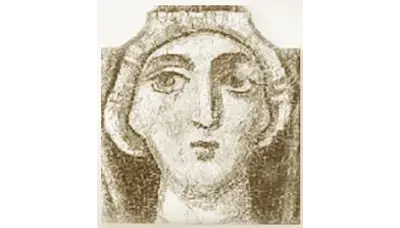
Anna Komnene, commonly Latinized as Anna Comnena, was a Byzantine princess and author of the Alexiad, an account of the reign of her father, the Byzantine emperor, Alexios I Komnenos. The Alexiad is the most important primary source of Byzantine history of the late 11th and early 12th centuries. Although she is best known as the author of the Alexiad, Anna played an important part in the politics of the time and attempted to depose her brother, John II Komnenos, as emperor and seize the throne herself.
