James Hogg Quotes
He had one uniform practice, and a very bad one it was, during the time of family worship, and just three or four seconds before the conclusion of the prayer, he started to his feet, and ran barking round the apartment like a crazed beast.
Hogg, James. "The Shepherd's Dog." The Shepherd's Calendar, vol. 2, William Blackwood, 1829, p. 308.


School Prayer had been opposed long before its Constitutionality was tested in the courts and found unconstitutional.


The only soldier ever so honored. Marshall was then the Deputy Chief of Staff of the Army. The President was meeting with the Army leadership to plan the nation’s preparedness to come with the Nazi menace. Army brass had wanted to build up large ground forces. However, conservatives (in those days opposed to military spending) accused the Roosevelt administration of fomenting war. FDR wanted to be less visible and opted for a program that would build 7 aircraft factories first and later build ground forces. He asked if all agreed and the army heads all bobbed except for Marshall, then a relatively junior general. FDR never forgot the one general who told him, No, and when War was eminent, he selected Marshall lead the military and promoted him over 34 more senior generals. Great leaders appreciate people who have the courage and integrity to say No to power and FDR had the confidence in himself that he could handle people who disagreed or were difficult. This was one of FDR’s many great appointments.


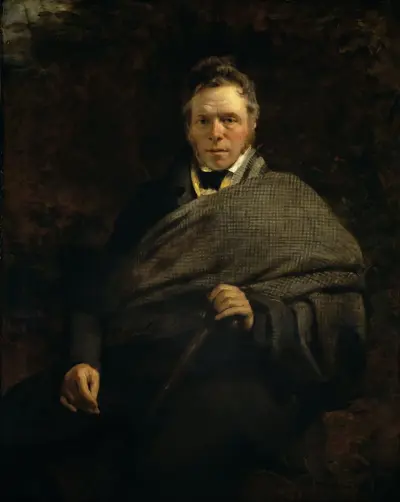
James Hogg was a Scottish poet, novelist and essayist who wrote in both Scots and English. As a young man he worked as a shepherd and farmhand, and was largely self-educated through reading. He was a friend of many of the great writers of his day, including Sir Walter Scott, of whom he later wrote an unauthorised biography. He became widely known as the "Ettrick Shepherd", a nickname under which some of his works were published, and the character name he was given in the widely read series Noctes Ambrosianae, published in Blackwood's Magazine. He is best known today for his novel The Private Memoirs and Confessions of a Justified Sinner. His other works include the long poem The Queen's Wake (1813), his collection of songs Jacobite Relics (1819), and his two novels The Three Perils of Man (1822), and The Three Perils of Woman (1823).
