Silius Italicus Quotes
Groundless superstition ill befits an army; valor is the only deity that rules in the warrior's breast.
Italicus, Silius. Punica, Volume I: Books 1-8. Translated by J. D. Duff, Harvard University Press, 1934.


In contrast to the American army, there was no conscription in Canada. Note the quaint Canadian euphemism, "invited."

Attila the Hun. The Romans aided by Theodoric, King of the Visigoths, fought the Huns in the only battle that Attila ever lost which he lost badly. There were 165,000 men killed in an afternoon. The Roman General, Flavius Aetius, had been a boyhood friend of Attila’s and had fought with him against the Visigoths. The Romans had Attila trapped but his old friend let him escape with just a good thrashing to his ego and army as to not upset the balance of power and tilt it in favor of the Goths. Roman foreign policy at the time was to keep all the Barbarians strong enough to fight one another so that none would be dominant but all weaker than Rome. Divide and conquer.

He supported the Chilean poor against the oppression of the Chilean military dictator Augusto Pinochet. Like many who spoke out against the Fascist government he was “disappeared” shortly after he wrote the letter. Pinochet was eventually convicted of crimes against humanity.

An example of this was the landing in the beaches of Normandy in WWII. Once on the beaches the allied troops had to win or die. Some of the most heroic fighting in American and English military history occurred on those beaches. Another was the Spanish Explorer Hernando Cortez who after landing in the New World, had his ships burned so that he and his soldiers had to conquer or they would die.

Patton, though a great leader and fighting general, also was almost crazy and irrational at times. This quotation illustrates one of those periods. Somehow, most of the officers and enlisted men under his command were generally able to distinguish and live with him. In this case, no one tried to ferret out the cowards and kill them despite the Generals exhortation. Also, his—and other people’s notion that bravery is genetically inherited is scientifically incorrect.


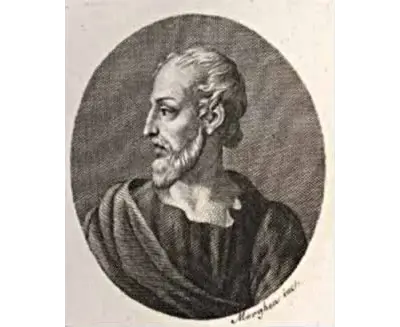
Silius Italicus, in full Tiberius Catius Asconius Silius Italicus (Latin: [ˈsiːlijʊs ɪˈt̪alɪkʊs], c. 26 – c. 101 AD), was a Roman consul, orator and epic poet of the Silver Age of Latin literature. His only surviving work is the 17-book Punica, an epic poem about the Second Punic War and the longest surviving poem in Latin at over 12,000 lines.
