King James I Quotes
God has power to create, or destroy, make, or unmake at his pleasure, to give life, or send death, to judge all, and to be judged nor accountable to none: to raise low things, and to make high things low at his pleasure, and to God are both soul and body due. And the like power have Kings; they make and unmake their subjects: they have power of raising, and casting down: of life, and of death: judges over all their subjects, and in all causes, and yet accountable to none but God only.
James I, King of England. "A Speach to the Lords and Commons of the Parliament at White-Hall." The Workes of the Most High and Mightie Prince, Iames. Robert Barker and John Bill, 1616, pp. 527-528.


This concept was later formalized in British law. See Blackstone.


The assumption of one supreme authority being necessary for a state, has been the most common assumption in almost all cultures and times before the American Revolution. What is amazing is that the Founding Fathers rejected this notion in favor of our complex system of checks and balances restrained by a Constitution which no society had ever tried before. England in contrast as it became more democratic, simply shifted the supreme, uncontrollable entity from the King to the Parliament which it is even today. Parliament can do virtually anything unrestrained by anything except their judgment and tradition.


Typical of the times, the king was accountable to no one for anything. 200 years later, most of the world have accepted the principle that no one is above the law and that every leader is accountable to the people.

Although extremely enlightened and liberal in man ways, as an autocrat she saw virtues in monarchy.


The early human idea that human rulers must somehow divine and/or designated and supported by the deity was present over many cultures and geographies.

Province of the Congo. Both the British and the Belgians were vying for Katanga to become a part of their empire. Msri, a cruel tyrant, was hated by his people, many of whom he had had murdered.

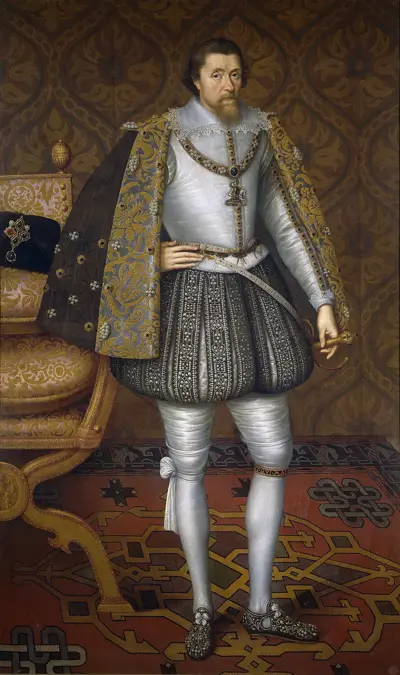
James VI and I was King of Scotland as James VI from 24 July 1567 and King of England and Ireland as James I from the union of the Scottish and English crowns on 24 March 1603 until his death in 1625. The kingdoms of Scotland and England were individual sovereign states, with their own parliaments, judiciaries, and laws, though both were ruled by James in personal union.
