Raphael Lemkin Quotes
Genocide has two phases: one, destruction of the national pattern of the oppressed group; the other, the imposition of the national pattern of the oppressor. This imposition, in turn, may be made upon the oppressed population which is allowed to remain or upon the territory alone, after removal of the population and the colonization by the oppressor's own nationals.
Lemkin, Raphael. Axis Rule in Occupied Europe: Laws of Occupation, Analysis of Government, Proposals for Redress. Carnegie Endowment for International Peace, 1944, p. 79.


Even at this early time, it was clear that whites had brought numerous diseases that decimated the Indians. Alcohol and disease killed many more native Americans than all the wars—intertribal and with the whites—ever did. Neolin warned but did not have more than regional influence.


Published 100 years after it was written. This is the first known written statement of what became a de facto policy regarding the American Indian.

This was part of the continual conflict between the Muslims and the Eastern Orthodox Christians. The Greeks ended up doubling their territory.

At the time, Jefferson was the Governor of Virginia and the Indians and white settlers in the Western part of the state were coming into increasing conflict. This rather heartless and blood thirsty quotation of Jefferson’s surprises many of his great admirers. Especially because of his historical sophisticated and empathetic way he treated Indians. See {589102}, {589103}, {589113}, {589125}, and {605068}. Jefferson saw Indians much like he saw whites—differentially. Some were friends, some neutral, and some dangerous enemies. His wish to exterminate or ethnically cleanse these Indians was limited to these Indians—not to Indians in general. Nonetheless, it shows a violent side of Jefferson that was in play with enemies. As President, he was aggressive against the Muslim Pirates (see {623707} and {617123}).

While he fairly described the Spanish intentions, the reality which was not known at the time, was that most of the deaths in South America were caused by disease brought by the Spanish for which Europeans had some immunities and the natives of the New Word, none.

The Tanguts were a major Chinese Buddhist culture and people with generations of history, emperors, books and religion. The Mongols had been fighting them for over 20 years. After his death, his army obeyed the order and not only murdered every Tangit they could in the capital city in Western Xia, but razed their buildings, burned their books, destroyed their tombs and artifacts. Tanguts who were in other parts of Western Xia were absorbed and assimilated into the Mongol culture. Even the Tangut language died out in a few generations. The Tanguts had been made to “vanish”.


Gold had been discovered in the Black Hills lands that were sacred to the Lakota Sioux and were reserved for exclusive use of the Indians by the Fort Laramie Treaty. Greedy whites, ignoring the treaty provisions not only entered the Black Hills to pan and mine for the gold, but killed many Indians they ran across Sherman was angry and wrote to his old friend President Grant. Grant, now a political, had to contend with public opinion that thought it absurd that gold should not be mined because a few Indians regarded the land as sacred. Meanwhile Grant was working with a few others to portray minor clashes between whites and Indians in the Black Hills as violent and dangerous Indians breaking the treaty.


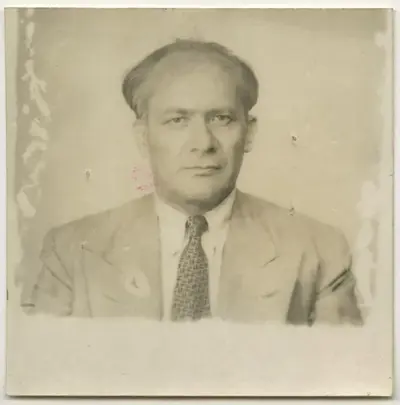
Raphael Lemkin was a Polish lawyer of Jewish descent who is best known for coining the word genocide and initiating the Genocide Convention. Lemkin coined the word genocide in 1943 or 1944 from genos (Greek for family, tribe, or race) and -cide (Latin for killing). His work inspired Jessie Bernard whose American Community Behavior contains one of the earliest sociological studies of genocide.
