Leland Stanford Quotes
From my earliest acquaintance with the science of political economy, it has been evident to my mind that capital was the product of labor, and that therefore, in its best analysis there could be no natural conflict between capital and labor.
Stanford, Leland. Co-operation of Labor: Speech of Hon. Leland Stanford of California in the Senate of the United States, February 16, 1887. Washington: Government Printing Office, 1887.


At the time, it did seem impossible that labor and capital would ever have harmonious relations. But the notion that slavery would solve the problem is as preposterous as anything ever entered into the American political dialogue. But there were many in the South, and some in the North, who actually believed it. Even 150 years later, while labor and capital relations were much better than pre Civil War, they still could not be described as “harmonious” or “friendly”.


Ingersoll was considered to be the greatest orator and political thinker of his day, but his overt atheistic views curtailed his elected political career.


The class warfare and control of society previously by the wealthy made this the first article of the new Spanish Constitution. This very concept was one of the factors that led to the Spanish Civil War as Spain was in many ways still a feudal society.

the Bolshevik Communists of Russia Zenzinov was often a critic of the Bolsheviks.


In 1902 there was a major coal strike in which Roosevelt pressured the coal operators to make concessions to labor. The abuses of some of the large monopolistic enterprises were turning large segments of America against capitalism. TR always believe that he saved capitalism from its own self destruction. The same has been felt about Franklin Delano Roosevelt who many believe saved American capitalism in the Great Depression.

The “bread box” was a metal box used in most homes to keep bread fresh before refrigerators were so large and prevalent.
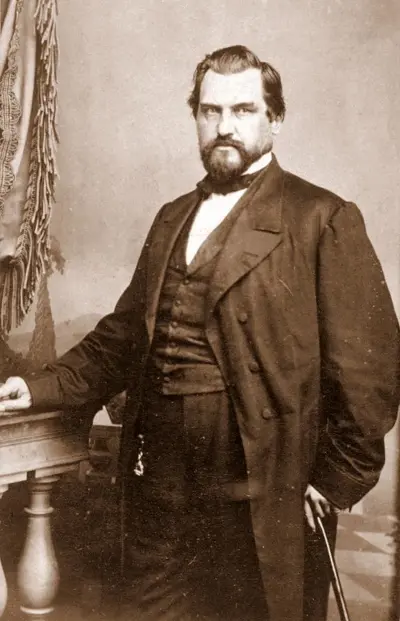
Amasa Leland Stanford was an American industrialist and politician. He was the founder (with his wife, Jane) of Stanford University. Migrating to California from New York at the time of the Gold Rush, he became a successful merchant and wholesaler, and continued to build his business empire. He spent one two-year term as Governor of California after his election in 1861, and later eight years as a United States Senator. As president of Central Pacific Railroad, beginning in 1861, and later Southern Pacific, he had tremendous power in the region and a lasting impact on California. He is widely considered a robber baron.
