Friedrich Hayek Quotes
Freedom can be preserved only if it is treated as a supreme principle which must not be sacrificed for particular advantages.
Friedrich A. Hayek, 1899-1992, Austrian Economist and Political Philosopher, Nobel Laureate in Economics, Law, Legislation and Liberty
Sourced by: Eigen's Political and Historical Quotations


The first Jew to run for the Vice Presidency on a major party ticket.


Crockett and a large group of Tenesseeans all died defending the Alamo for the Liberty and Independence from the Mexican Dictator, Santa Anna.


Trumbo was morally opposed to war. He also refused to name Hollywood communists to Congressional Committees during the Red Scare. He was then blacklisted from his occupation, screen writing.

During the Reign of Terror of the French Revolution some powerful Frenchmen in the French Colonies wanted to maintain the caste system to keep the Blacks and other indigenous people from claiming equal rights. They claimed that the colonies would perish. But the French Revolutionaries were committed to “Liberty, Equality, and Fraternity”, and Barnave summed up their viewpoint in this succinct statement of policy which became a memorable quotation.

McCarthy was an alcoholic, paranoid demagogue who attacked anyone who went against him, usually calling him a Communists or agents of the Communist conspiracy. McCarthy was very powerful until some national leaders stood up to him and publicly demanded the proof he claimed he had. He was not able to prove he ‘uncovered’ a single communist. After that, he was censured by the Senate and lost his power and influence.

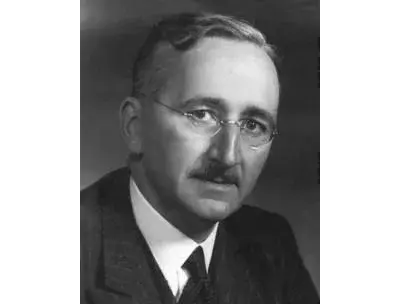
Friedrich August von Hayek CH FBA, often referred to by his initials F. A. Hayek, was an Austrian-British economist and philosopher who is best known for his defence of classical liberalism. Hayek shared the 1974 Nobel Memorial Prize in Economic Sciences with Gunnar Myrdal for his "pioneering work in the theory of money and economic fluctuations and [...] penetrating analysis of the interdependence of economic, social and institutional phenomena". His account of how changing prices communicate information that helps individuals co-ordinate their plans is widely regarded as an important achievement in economics, leading to his Nobel Prize.
