James Lawrence Quotes
Free Trade and Sailors’ Rights
Two of the major issues of the War of 1812 were the right of American ships to trade in Europe. The British were at war with France and boycotted all ports controlled by the French. They would seize American ships bound for or having traded with French areas. In addition, many American merchant seamen had formerly served in the British Navy and British warships would stop American merchant ships and remove “suspected” deserters and force them into British military naval service. Captain Lawrence was mortally wounded in this battle. See {625136}.
James Lawrence, 1781–1813, Naval Officer and Commander of the USS Chesapeake, Text on the Flag the ship flew into battle against the British HMS Shannon in the War of 1812
Sourced by: Eigen's Political and Historical Quotations

He became one of the great heroes of the American navy and this statement is taught to every American sailor. Actually, although a very good Captain, in the battle with the Shannon, he made a number of mistakes which was unusual for him, but the Shannon won the battle. The American sailors did not give up the ship, but they were overcome with one of the highest casualty rates of any sea battle of the time. Had Lawrence lived—he dies of infection from his wounds—he probably would have faced a board of inquiry or a court martial, but his death turned him into an American hero. See {625129}. Commodore Perry, a friend of Lawrence, had “Don’t Give Up The Ship” sewn on to his battle flag, and the motto has been part of the United States Navy ever since.

In one of its most effective relief programs, the United States saved millions of Russians in the famine of 1921-1922. However, millions more starved to death and died of disease. The United States had at any one time 200 Americans, under Herbert Hoover, who were fighting to save as many as possible despite some on America wanting to show how the Communist Government was incapable of handling the situation, which they clearly were.


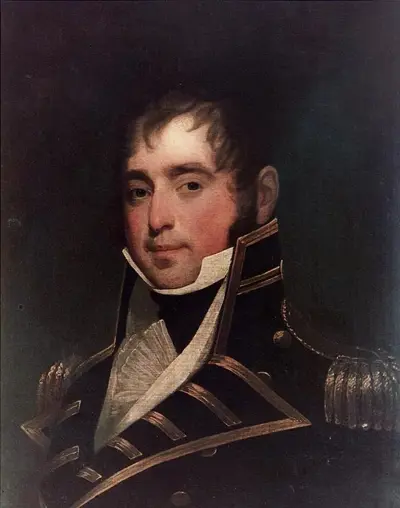
James Lawrence was an American naval officer. During the War of 1812, he commanded USS Chesapeake in a single-ship action against HMS Shannon commanded by Philip Broke. He is probably best known today for his last words or "dying command" "Don't give up the ship!", which is still a popular naval battle cry, and which was invoked by Oliver Hazard Perry's personal battle flag, adopted to commemorate his dead friend.
