Humphry Davy Quotes
Fortunately science, like that nature to which it belongs, is neither limited by time nor by space. It belongs to the world, and is of no country and of no age …
Such views often make zealous patriots suspicious of the loyalty of scientists.
Humphry Davy, 1778–1829, English Chemist, Quoted in David Knight, Humphry Davy: Science & Power
Sourced by: Eigen's Political and Historical Quotations


Ingersoll was considered to be the greatest orator and political thinker of his day, but his overt atheistic views curtailed his elected political career.


In this sense, the U.S. is intellectually much like science. See Stephen Jay Gould {586065}.


L. P. Jacks. If politicians followed the clerical calls for Christian ethics in international affairs, they would not easily maintain their positions and power. See {640093}.


This is a very different view from the prevailing American legal and cultural view. The United States grants patents and copyrights even when the taxpayer has paid for much of the research and development, even when the inventor was educated by the state. The difference is an intellectual and philosophical one. America is anxious to incentivize people to create and invent and especially to encourage capital to flow to R&D. Toynbee comes from an intellectual tradition where science and technology was the finest in the world, but it was done by the well-to-do for the sake of doing it. Both approaches had been immensely success for their times, but the need for technological development is so great that we should not limit it to the people of wealth and a social class for whom money may not be a driver while it is for most others.

The Computer was invented and fabricated by Charles Babbage and was called an “Analytical Engine” by him.

See {401426} for more on his view of nationality and nationalism.


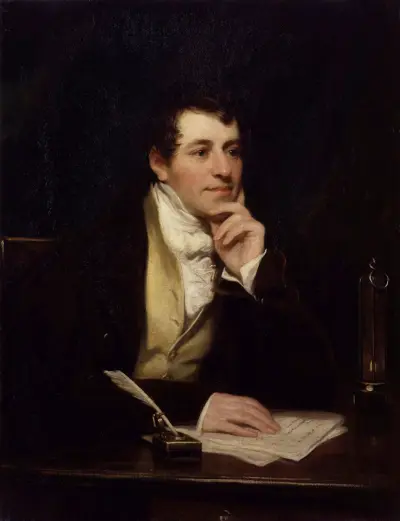
Sir Humphry Davy, 1st Baronet PRS MRIA FGS FRS was a Cornish chemist and inventor who invented the Davy lamp and a very early form of arc lamp. He is also remembered for isolating, by using electricity, a series of elements for the first time: potassium and sodium in 1807 and calcium, strontium, barium, magnesium and boron the following year, as well as for discovering the elemental nature of chlorine and iodine. Davy also studied the forces involved in these separations, inventing the new field of electrochemistry.
