Tacitus Quotes
Formerly we suffered from crimes; now we suffer from laws.
Tacitus, Cornelius. The Annals of Tacitus. Translated by Alfred John Church and William Jackson Brodribb, Macmillan and Co., 1876, p. 81.


See Ulysses S. Grant for a similar American view that very year.

The article he wrote was the first serious plan and proposal to repeal Prohibition which was opposed by most people after the country had experienced the negative unintended consequents of making alcohol illegal. This was not unlike the second thoughts that many Americans began to develop regarding the War on Drugs at the end of the 20th century. Many felt the good that prohibition did (it improved the nation’s healt) was not worth the bad that came with it (crime, corruption, police brutality, disrespect for the law.)

The Senator was arguing against a bill to correct an aspect of the immigration law where infants and very young clildren are broght to the United States by parents who entered illegally. The children grow up in the United States—the only country and home that they have ever known. American law required that they be deported to “their countries” which they have no memory of and many do not even speak the language or know the culture. Sessions, is an example of the view that law defines justice. Therefore laws cannot be unjust nor can enforcing the law. Opponents point out that even in the United States we have, in earlier times, “enforced the law” which we came to regret and see as an injustice. The Fugitive slave laws, the Southern racial discrimination laws, and the law allowing Japanese American Citizens to be interned and lose their land during WWII are a few examples of laws, the enforcement of which is seen by most Americans as having been unjust. The execution of “witches” in early America was in conformity with the law.


The Mishnah was the first written codification of ancient Jewish laws and interpretations. The Books of Moses--the first 5 Books of the Old Testament was the fundamental law--God's law. The Mishnah was a combintion of administative and policy manuals and judicial precedents.


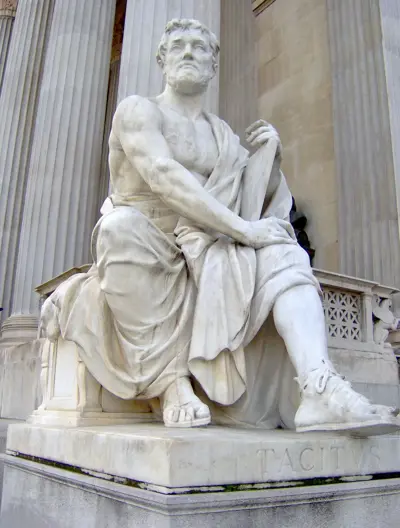
Publius (or Gaius) Cornelius Tacitus (AD 56 – c. 120) was a Roman historian and politician. Tacitus is widely regarded as one of the greatest Roman historians by modern scholars. He lived in what has been called the Silver Age of Latin literature, and has a reputation for the brevity and compactness of his Latin prose, as well as for his penetrating insights into the psychology of power politics.
