Xenophon Quotes
For drink, there was beer which was very strong when not mingled with water, but was agreeable to those who were used to it. They drank this with a reed, out of the vessel that held the beer, upon which they saw the barley swim.
Xenophon, ~430 BC - ~357 BC, Greek Soldier & Historian, Anabasis
Sourced by: Eigen's Political and Historical Quotations


This is one of the early references to beer.


Before dying in 1833 Fernando predicted the ambiguity of Spain’s future.


_0_thumbnail_47x47.jpg "Statue of Robert Hall in Leicester.")


This is one of the earliest observations of the fact that after drinking alcohol, a person is apt to speak without his usual inhibitions and judgment. This has been the downfall of many politicians and is the largest problem of maintaining secrecy and confidentiality.


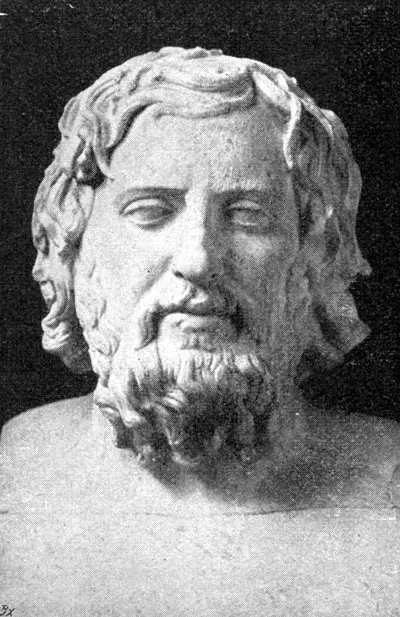
Xenophon of Athens (/ˈzɛnəfən, -ˌfɒn/; Greek: Ξενοφῶν, Ancient Greek: [ksenopʰɔ̂ːn], Xenophōn; c. 430 – 354 BC) was an Athenian-born military leader, philosopher, and historian. At the age of 30, Xenophon was elected a commander of one of the biggest Greek mercenary armies, the Ten Thousand, that marched on and came close to capturing Babylon in 401 BC. As the military historian Theodore Ayrault Dodge wrote, "the centuries since have devised nothing to surpass the genius of this warrior". Xenophon established precedents for many logistical operations, and was among the first to use flanking maneuvers and feints. Xenophon's Anabasis recounts his adventures with the Ten Thousand while in the service of Cyrus the Younger, Cyrus's failed campaign to claim the Persian throne from Artaxerxes II of Persia, and the return of Greek mercenaries after Cyrus's death in the Battle of Cunaxa. Anabasis is a unique first-hand, humble, and self-reflective account of military leader's experience in antiquity. On the topic of campaigns in Asia Minor and in Babylon, Xenophon wrote Cyropaedia outlining both military and political methods used by Cyrus the Great to conquer the late Assyrian Empire in 539 BC. Anabasis and Cyropaedia inspired Greeks and Alexander the Great to conquer Babylon and the Achaemenid Empire in 331 BC.
