Zachary Taylor Quotes
First Lady of the Land
The term “First Lady” has been used ever since.
Zachary Taylor, 1784-1850, 12th President of the United States (Whig, KY), Phrase used to describe Dolley Madison, Quoted in Paul Dickson, Words from the White House
Sourced by: Eigen's Political and Historical Quotations


She accompanied William Howard Taft at his inauguration from the Capitol to the White House—what we call the ‘Inaugural Parade’. No first lady had ever done that, and there was much criticism. However, she was a staunch feminist and so was the new President—see {639924} .

The term had been used to describe Dolley Madison (see {620740}) but this was the first formal public use by an American official.

There was a social custom amongst the wealthy women of early American society where if they were moving to a new town, they would present their cards to the established female residents, who would then visit the newcomer at her home. Dolley Madison, anxious to bring some social civilization to Washington, still a rough swamp area, went out of her way to visit all comers and the Cabinet (Department) wives then did the same. However, as the government and Washington grew, this became more and more difficult, and subsequent first ladies wanted more of their privacy and time devoted to family. See {620647} for more.

There was a social custom amongst the wealthy women of early American society where if they were moving to a new town, they would present their cards to the established female residents, who would then visit the newcomer at her home. Dolley Madison, anxious to bring some social civilization to Washington, still a rough swamp area, went out of her way to visit all comers and the Cabinet (Department) wives then did the same. However, as the government and Washington grew, this became more and more difficult, and subsequent first ladies wanted more of their privacy and time devoted to family. As America grew in importance, more counties sent ambassadors to Washington, and their wives all expected to be visited and invited. See {620648} for more on the “obligations” of a first lady and cabinet wives.


A ceremony in Richmond, Virginia had to wait a few minutes while the First Lady and her secretary were finishing the copy for Mrs. Roosevelt’s daily column in the Presidential car. She had a deadline, and on several occasions major affairs of state were delayed a few minutes until she could finish writing and file her copy.
At the start of the War, Mrs. Roosevelt took a position (without pay) in the Office of Civil Defense to help with the war effort. However, there was much criticism from left and right. The concern was that she would be too influential in a line position within the Executive Branch of the Government which her husband headed. When she spoke, it would be hard to tell whether it was her personal views or whether she was reflecting the President’s wishes. She resigned after several weeks and told her readers that she had hoped that she would just be accepted for herself as an individual but she realized that this was not yet possible and she was wrong.

The President’s (William Howard Taft’s) wife was a college graduate and an ardent feminist who had played an active part in her husband’s affairs both as an advisor, and reviewer of speeches and other drafts as well as a public role {638463} especially in the Philippines where she was loved and admired by the populace and the elites. Shortly after her husband assumed the presidency, she had a very serious and debilitating stroke and never again served as a political advisor and confidant. There are many who correlate this with Taft’s presidency which was not very successful compared to his brilliant success at every other public position. The Tafts—unusual for the time—had always worked closely as a team, and then that ended, Taft’s public performance suffered.
She was the first Presidential Spouse to openly declare and assume the role of a public figure.


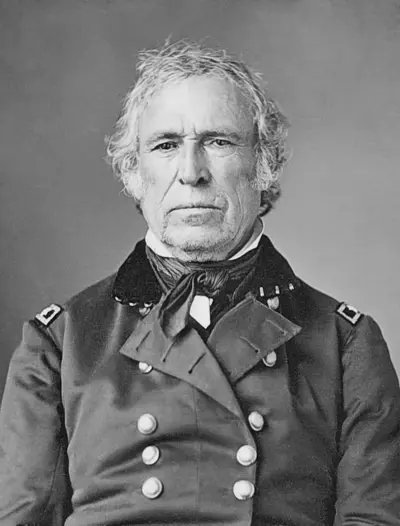
Zachary Taylor was an American military leader who served as the 12th president of the United States from 1849 until his death in 1850. Taylor previously was a career officer in the United States Army, rose to the rank of major general and became a national hero as a result of his victories in the Mexican–American War. As a result, he won election to the White House despite his vague political beliefs. His top priority as president was preserving the Union. He died sixteen months into his term, having made no progress on the most divisive issue in Congress, slavery.
