Eleanor Roosevelt Quotes
People can gradually be brought to understand that an individual, even if she is a President's wife, may have independent views and must be allowed the expression of an opinion. But actual participation in the work of the Government, we are not yet able to accept.
At the start of the War, Mrs. Roosevelt took a position (without pay) in the Office of Civil Defense to help with the war effort. However, there was much criticism from left and right. The concern was that she would be too influential in a line position within the Executive Branch of the Government which her husband headed. When she spoke, it would be hard to tell whether it was her personal views or whether she was reflecting the President’s wishes. She resigned after several weeks and told her readers that she had hoped that she would just be accepted for herself as an individual but she realized that this was not yet possible and she was wrong.
Eleanor Roosevelt, 1884-1962, First Lady (Franklin Delano Roosevelt), U. S. Delegate to the United Nations, Column, My Day, February 23, 1942
Sourced by: Eigen's Political and Historical Quotations


We count on Mormon assemblages to


Although most politicians of the time opposed voting rights, Harding, whose wife was herself a suffragette, and an accomplished woman, tried to lead the nation in the new direction of female equality. It was one of the few laudatory things he did in an otherwise lap luster presidency.

She made no public appearances other than being the hostess at state dinners. Nor did she ever give an interview or talk about any public matter. Contrast her view with that of her successor as first lady, Nellie Taft {640711}.


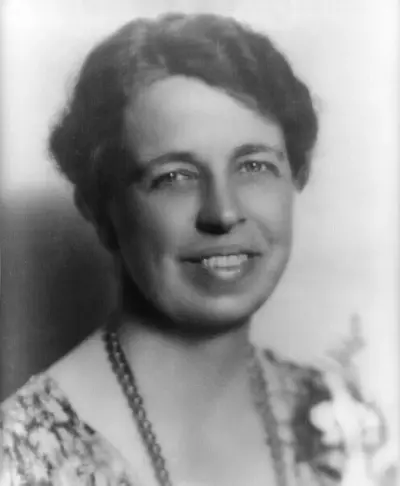
Anna Eleanor Roosevelt was an American political figure, diplomat and activist. She served as the First Lady of the United States from March 4, 1933, to April 12, 1945, during her husband President Franklin D. Roosevelt's four terms in office, making her the longest-serving First Lady of the United States. Roosevelt served as United States Delegate to the United Nations General Assembly from 1945 to 1952. President Harry S. Truman later called her the "First Lady of the World" in tribute to her human rights achievements.
