William J. Brennan Jr. Quotes
Far beyond the bounds of human decency …. soldiers ought not be asked to defend a Constitution indifferent to their essential human dignity.
In 1958 the Army experimented with a soldier by sousing him with LSD without his knowledge. Years later he still suffered serious mental consequences. He sued but a majority of the Supreme Court ruled that maintenance of the good order of the military precluded the courts even hearing such a lawsuit.
William J. Brennan, Jr., 1906-1997, U. S. Supreme Court Justice, Dissent, United States v. James B. Stanley
Sourced by: Eigen's Political and Historical Quotations

None of the Arab organizations or national armies have a similar code.


Monroe was then Secretary of State and the U. S. was at war.


Jefferson’s original was: We hold these truths to be sacred and undeniable that all …

After the Revolutionary War, the army expected to be compensated and made provision for. But Massachusetts did very little for the Massachusetts line (the state troops were referred to as the “line”.) Shaw and many others looked to the new national government for a solution but a constitution had not even been discussed in convention in 1783 and would not for another 4 years. The Continental Congress could do almost nothing as they had few resources of their own and no power to require the states to do anything.

The President did not apparently think that this would be a religious test of office which would be prohibited by the Constitution.


Dr. Van Sim tested the drug, quinuclidinyl benzilate known as BZ, on himself rather than expose soldiers to it. Van Sim received the Decoration for Exceptional Civilian Service because he tried many new drugs on himself, before exposing them to American soldiers. The CIA, in contrast, was not so responsible and exposed innocents, both military and civilian, to dangerous drugs without any knowledge on their parts, much less permission. See XXX.


Hayward claimed that Wilson was the first American President who ever criticized the American Constitution. Many do not agree as Madison and Jefferson in part, along with most other Americans, found the Constitution so wanting that it was ratified only on condition of the passage of the Bill of Rights. Jackson, was distressed by the limitations on the President and many others had their objections, but Wilson, before he became a politician was a prominent academic political scientist and wrote voluminously and had an intellectual following so his criticism was not considered so “political” as others.
America is almost unique among nations where the military has never been a force that either dominated or controlled the government or acted independently from it. The Founding Fathers knew well the history of Europe and other nations, and built many checks into our Constitution and our traditions with George Washington, setting the example for American military men forever after.

In early America, there was great concern about a standing army—a military force that exists and is organized in peacetime. History showed the founding fathers that tyrants who siezed power almost always did so by getting control of the standing army. The logic was if there is no standing army, no one can control it and therefore no tyrant can control the country by force. At the time, however, with oceans protecting us, there was penty of time to mobilize a defensive army should any foreign power invade. However, with modern military technology, and the importantance of retaliation as a protective3 strategy, it is virtually impossible to not have a standing army and stoll be secure.
While most modern armies treat officers and enlisted men who desert equally or even favor the officers, the Visigoths made desertion by an officer the severest of crimes. A centurion was the officer in charge of 100 men. There were 10 decurians (leaders of 10) under him, They were the modern equivalent of the Sergeants—non-commissioned officers. Their penalty for desertion was only the paying of a heavy fine. It was the officers who had to set the example. This set of laws is the most formalized and sophisticated compendium of laws of the so-called “barbaric peoples” of Europe. The compilation was in many ways a documentation of the traditional laws of the Visigoths that had evolved over hundreds of years.

Ernestine Louise Polowsky. Rose was an atheist as well, a rarity for abolitionists of the time.

Many modern Americans who look to the founding fathers for modern guidance regarding gun rights, foreign policy, and many other facets of government are shocked to learn that there was almost unanimous opposition to maintaining a standing army in times of peace. That there was very little concept of military preparedness.
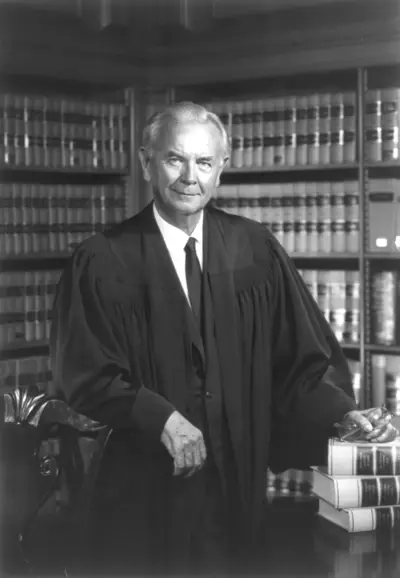
William Joseph Brennan Jr. was an American lawyer and jurist who served as an Associate Justice of the United States Supreme Court from 1956 to 1990. He was the seventh-longest-serving justice in Supreme Court history, and known for being a leader of the Court's liberal wing.
