Fulton J. Sheen Quotes
Faced with such insecurity, labor unions seek a solution in demands for higher wages, shorter hours, pensions, and such things. But this approach takes monopolistic capitalism for granted, and accepts the unnatural division between property and responsibility as permanent. A much more radical solution is apt to come, and this may take either of two forms.
Sheen, Fulton J. Communism and the Conscience of the West. Bobbs-Merrill, 1948, p. 119.


In 1902 there was a major coal and railroad labor crisis. The owners and operators refused to negotiate or bargain with labor: This quotation is very famous because it is an iconic picture of the views and attitudes of the large industiralists at the turn of the 20th Century. More than opposing labor unions, they actually believed that God had selected them to run the economic and business affairs of the country if not the world. It was their Christian values and paternalism that the workers should look to in order to determine the rights and priviliges of the working man or woman. This upper class attitude was one of the major reasons that class warfare broke into the open. Ironically, there was not much difference between the attidudes of the industiral leaders and the notions of fudalism.


Martin was explaining the position of Pope John Paul II.


It has been the blue collar worker who has borne the economic brunt of globalization in the industrial democracies. It was their jobs who moved off shore, their wages that were under pressure from low wage workers in emerging nations.

At the time, it did seem impossible that labor and capital would ever have harmonious relations. But the notion that slavery would solve the problem is as preposterous as anything ever entered into the American political dialogue. But there were many in the South, and some in the North, who actually believed it. Even 150 years later, while labor and capital relations were much better than pre Civil War, they still could not be described as “harmonious” or “friendly”.
He had squads of thugs that he would “rent” out to other gangsters for their enforcement activities and to unions to protect themselves from goons and intimidate non union workers. However, he would not let his men work as goons and strike busters or for companies—despite huge pay offers—to keep their workers in line, a common practice at the time.


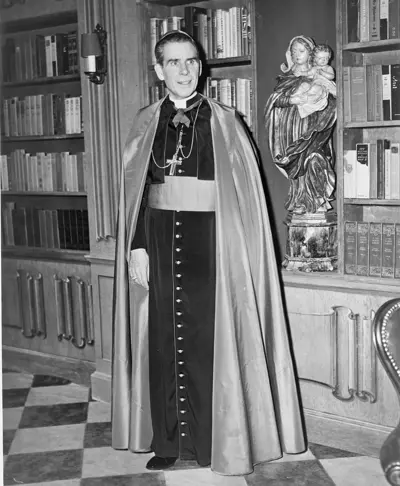
Fulton John Sheen was an American bishop (later archbishop) of the Catholic Church known for his preaching and especially his work on television and radio. Ordained a priest of the Diocese of Peoria in 1919, Sheen quickly became a renowned theologian, earning the Cardinal Mercier Prize for International Philosophy in 1923. He went on to teach theology and philosophy at the Catholic University of America as well as acting as a parish priest before being appointed Auxiliary Bishop of the Archdiocese of New York in 1951. He held this position until 1966 when he was made the Bishop of Rochester. He resigned in 1969 as his 75th birthday approached, and was made the Archbishop of the titular see of Newport, Wales.
