South Africa Quotes
Everyone has the right to fair labor practices. Every worker has the right to form and join a trade union; to participate in the activities and programs of a trade union; and to strike. Every employer has the right to form and join an employers' organization; and to participate in the activities and programs of an employers' organization. Every trade union and every employers' organization has the right to determine its own administration, programs and activities; to organize; and to form and join a federation. Every trade union, employers' organization and employer has the right to engage in collective bargaining.
Very few constitutions provide for the extensive labor rights that the South African Constitution does. Most other countries that create labor rights, do so via legislation as in the United States.
South Africa, Section 23, Constitution, 1994
Sourced by: Eigen's Political and Historical Quotations


The act gave unions rights of organization which they had not had before in America, but few critics ever characterized it in the over the top rhetoric which was characteristic of Nixon in his early political years.


In 1902 there was a major coal and railroad labor crisis. The owners and operators refused to negotiate or bargain with labor: This quotation is very famous because it is an iconic picture of the views and attitudes of the large industiralists at the turn of the 20th Century. More than opposing labor unions, they actually believed that God had selected them to run the economic and business affairs of the country if not the world. It was their Christian values and paternalism that the workers should look to in order to determine the rights and priviliges of the working man or woman. This upper class attitude was one of the major reasons that class warfare broke into the open. Ironically, there was not much difference between the attidudes of the industiral leaders and the notions of fudalism.


This quotation was reprinted and widely distributed by the CIO in its 1936 organizing drive of the Ford Motor Company

Vladimir Lenin


Roosevelt shocked the conservative members of his own party with this statement. Labor unions were not then an accepted concept in American society. Anti trust legislation and enforcement was in its infancy and companies in an industry commonly conspired as to price fixing, labor negotiations and market share allocations. TR had a scrupulous sense of fairness and equity.


At the time, it did seem impossible that labor and capital would ever have harmonious relations. But the notion that slavery would solve the problem is as preposterous as anything ever entered into the American political dialogue. But there were many in the South, and some in the North, who actually believed it. Even 150 years later, while labor and capital relations were much better than pre Civil War, they still could not be described as “harmonious” or “friendly”.


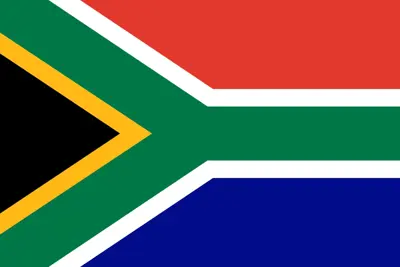
South Africa, officially the Republic of South Africa (RSA), is the southernmost country in Africa. With over 59 million people, it is the world's 23rd-most populous nation and covers an area of 1,221,037 square kilometres (471,445 square miles). South Africa has three capital cities: executive Pretoria, judicial Bloemfontein and legislative Cape Town. The largest city is Johannesburg. About 80% of South Africans are of Black African ancestry, divided among a variety of ethnic groups speaking different African languages. The remaining population consists of Africa's largest communities of European (White South Africans), Asian (Indian South Africans), and Multiracial (Coloured South Africans) ancestry.
