David Brooks Quotes
Every White House I have covered since Reagan, when I got here, power has been more concentrated in the White House than the one before.
Brooks, David. PBS NewsHour, Public Broadcasting Service, 2017.


Secretary of State William H. For a similar assessment of Seward see Morton S. Wilkinson.


Since Theodore Roosevelt, the Presidency has become stronger and Congress weaker. The original idea of the framers of the Constitution was to have three co-equal branches of government. However Gingrich was so partisan on this point that he lost most of his credibility and lost his position of leadership in the House. He was constantly asserting the power of the House against Democratic President Bill Clinton while he never had when Republican George W. Bush was President. His house impeached President Clinton on charges emanating from Clinton’s sexual foibles and effort to keep his predilections secret. This not only impeded government for a long time, but angered the public. In the end the Republican Controlled House could not even get a majority of the Republican controlled Senate to vote against Clinton, much less the super-majority the rules required. Ironically, by the second term of George W. Bush’s administration most members of Congress and the American public had thought the Presidency had gotten to powerful relative to Congress and Gingrich’s objective became a national one, but Gingrich himself had been discredited and was completely out of office.

This was the President’s original role regarding legislation. However, in the 20th century, Presidents have become more active and suggest laws and often initiate the process and then end it by signing the law that he suggested and shepherded through the Congress. But this was never the vision of the Founding Fathers, but since it is not addressed in the Constitution is not an unconstitutional process.

This letter was written shortly after the Constitution had been signed by the convention delegates. This difference between Adams and Jefferson would be at the heart of the first great partisan struggle in American history. Adams, as the second President, tried to increase and use the power of the Presidency. Jefferson opposed him, especially when Adams tried to run for a second term. The Adams-led Federalists were pitted against Jefferson’s Democratic Republicans in the first, and perhaps still the most bitter partisan struggle in American political history. The Jeffersonians accused Adams and the Federalists of trying to unravel the American Revolution and revert to a monarchy. The people not only sided with the Democratic Republicans, ousting Adams, but also turned out most of the Federalists. It was the end of the Federalist Party, and a new conservative party—without monarchial tendencies—the Whigs became the new opposition party.


Hamilton thought that the Executive Branch should be co-equal with the Judicial Branch and lifetime tenure should apply to both. This quotation is very important as we consider developing countries and emerging democracies. Some in the third world have Presidents for Life—a concept that most democracies scoff at. But the stability and the independence was important enough to some of the Founding Fathers was actually advocated and considered as we formed the American Democracy.

John Foster Dulles was the Secretary of State and brother Allen Dulles was head of the CIA.

Reagan, Ford, Nixon, Clinton


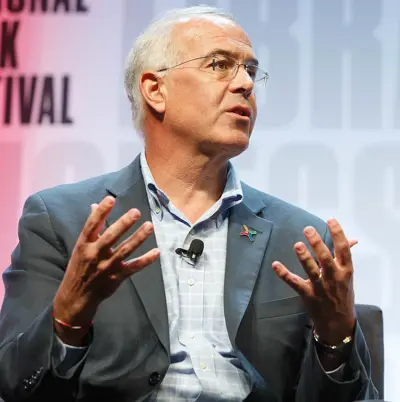
David Brooks is a conservative political and cultural commentator who writes for The New York Times. He has worked as a film critic for The Washington Times, a reporter and later op-ed editor for The Wall Street Journal, a senior editor at The Weekly Standard from its inception, a contributing editor at Newsweek, and The Atlantic Monthly, and a commentator on NPR and the PBS NewsHour.
