David Brooks Quotes
Decision-making power, whether it's on foreign affairs or domestic affairs, is concentrated in the White House in a reasonably small circle.
Brooks, David. PBS NewsHour. Public Broadcasting Service.

Mead argues that this is a trend that has been operating over many administrations. It could be argued that modern communications and the media have been significant drivers of this phenomenon along with the desire for White House staff to have as much control as they can obtain. Before modern communications, an Ambassador, or a Secretary of Commerce had to make decisions within the philosophical and political umbrella of the President’s general policies. They could not communicate immediately with the President or his staff. But once everyone in the government was connected, the President’s staff could make every important decision. However, with the many different major issues and emergencies of the modern era, the small group in the What House have not been able to deal with them all and the bureaucracy has been instructed not to decide big things without going through the White House. See {642086}.


Alberto Gonzalez, White House Counsel and later Attorney General who was forced to resign and David S. Addington, Counsel to the Vice President, had come up with a novel view of the powers of the presidency. They argued that since the President is the Commander in Chief, in a war situation or intelligence gathering thereto, has the Constitutional responsibility for that function, he need not obey any laws of Congress as in the conduct of the war Congress would be impinging on the Constitutional separation of powers which itself was prohibited by the Constitution. The argument did not find any significant legal support but for a while the George W. Bush White House behaved as if this were the law, despite the fact that even in the American Revolution and the War of 1812 Congress passed laws regulating the conduct of the armed forces as is provided for in other parts of the Constitution. Yet even Goldsmith would allow the President some powers that many think are unconstitutional and/or belong to Congress. See {32436}.


Periodically in American history, there has been a struggle between the Executive Branch and the Senate for dominance. The Senate’s power is negative however. It can block things, but cannot directly make them happen. The President can do both.


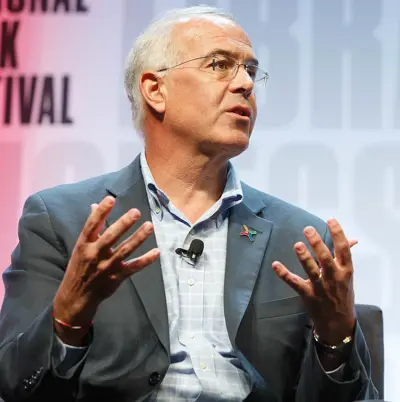
David Brooks is a conservative political and cultural commentator who writes for The New York Times. He has worked as a film critic for The Washington Times, a reporter and later op-ed editor for The Wall Street Journal, a senior editor at The Weekly Standard from its inception, a contributing editor at Newsweek, and The Atlantic Monthly, and a commentator on NPR and the PBS NewsHour.
