Henry A. Kissinger Quotes
Every statesman must attempt to reconcile what is considered just with what is considered possible.
Henry A. Kissinger, U.S. Secretary of State (Republican), U.S. National Security Advisor, A World Restored: Metternich. Castlereagh and the Problems of Peace, 1957
Sourced by: Eigen's Political and Historical Quotations


From the 1787 Philadelphia discussions on the Constitution right up to the Civil War there was compromise after compromise on the slavery issue. Many political issues are amenable to compromise like tax rates or election modalities. Others like freedom of religion and speech and slavery are not. With the latter, compromise just delays the inevitable and often makes the final resolution more contentious and often violent.

Viscount Morley of Blackburn


She was selected by the students to give the graduating senior's commencement address


This is a very important quotation. No one likes to make moral compromises, but Mann realized that there was a necessity in a complex society—especially a republic to make compromises. Politics cannot function without compromises of all kinds moral and otherwise as different people have different views of morality and rectitude. Mann observed that if compromises must be made, it is better for the politicians to make them than the educators, physicians, clerics, and other professional groups. Therefore politics takes the heat so that the other institutions of society do not have to. Thus politics has this crucial role among its others according to Mann.


Carlyle was of the opinion that legislators do not make good executives, managers, or leaders. Many in modern America agree.

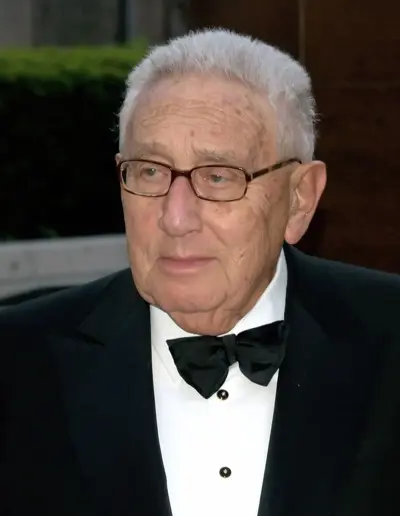
Henry Alfred Kissinger KCMG is an American politician, diplomat, and geopolitical consultant who served as United States Secretary of State and National Security Advisor under the presidential administrations of Richard Nixon and Gerald Ford. A Jewish refugee who fled Nazi Germany with his family in 1938, he became National Security Advisor in 1969 and U.S. Secretary of State in 1973. For his actions negotiating a ceasefire in Vietnam, Kissinger received the 1973 Nobel Peace Prize under controversial circumstances, with two members of the committee resigning in protest.
