Jose Marti Quotes
In politics, reality is that which is unseen. Politics is the art of combining a nation’s diverse or opposing factors to the benefit of its domestic well-being, and of saving the country from the open enmity or covetous friendship of other nations.
Jose Marti, 1853-1895, Cuban Revolutionary Leader, The Monetary Conference of the American Republics, 1891
Sourced by: Eigen's Political and Historical Quotations


The term immediately grew very popular in Germany and soon made its way to the English-speaking countries as “realpolitic”.

In a zero sum system whenever one party gains, the other must lose, and if one loses, the other has a corresponding gain. At other times, legislation was not a zero sum game. Many Congressmen believed that if good legislation would be passed, BOTH parties would benefit as would the country. If poor or no legislation were passed, that would be bad for all.


He had given a speech and then was accused by several representatives He then returned to the podium with this denial. Throughout history many political leaders have started wars to distract the public from the poor economy of other domestic failures. Many others would never do so. All the former, claim that they are the latter.


Not only were the Democratic and Republican Parties at odds, but both political parties were split with the different factions very hostile to each other. The Populists and the Progressives were putting great pressure in the Democrats, and the Corporate Republicans strongly and often viscously opposed President Roosevelt. America was politically fractionated. Roosevelt called for a comity and unity which never took place.


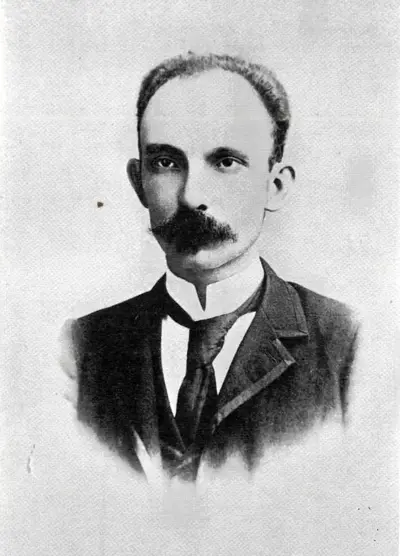
José Julián Martí Pérez was a Cuban poet, philosopher, essayist, journalist, translator, professor, and publisher, who is considered a Cuban national hero because of his role in the liberation of his country. He was also an important figure in Latin American literature. He was very politically active and is considered an important revolutionary philosopher and political theorist. Through his writings and political activity, he became a symbol of Cuba's bid for independence from the Spanish Empire in the 19th century, and is referred to as the "Apostle of Cuban Independence". From adolescence, he dedicated his life to the promotion of liberty, political independence for Cuba, and intellectual independence for all Spanish Americans; his death was used as a cry for Cuban independence from Spain by both the Cuban revolutionaries and those Cubans previously reluctant to start a revolt.
