Wilkie Collins Quotes
Every human institution (justice included) will stretch a little, if you only pull it the right way.
Wilkie Collins, 1824–1889, English Novelist & Playwright, The Moonstone
Sourced by: Eigen's Political and Historical Quotations


This was the explanation given to the populace most of whom wanted John executed for his cruel and corrupt rule. John was happy to avoid execution of prison, but not very happy with the phrasing. He was 27 years old at the time. Royalty was not held responsible the way others were.

Prosecutors, even ones who are frequent lawbreakers themselves violating defendant's rights or illegally manipulating trials, are reluctant to be officially found to have done so. Many politicians start their political careers as prosecutors and then rise to higher office. If it is officially found that they had abused a defendant and violated the law, it can be detrimental to their careers. So in many states, they have placed barriers making it much harder for an improperly convicted person to even get a court hearing. The cost to society however is that they are never accountable, and people have been wrongly imprisoned and cannot even get a hearing to prove that they were the victims of official misconduct. The rationale for these rules that prevent victims from obtaining fairness and justice is finality—the concept that there should be some end to the process of appeals so justice can be said to have been done. It prevents a kind of closure for many of the victims of crimes and their families if the guilty perpetrator is constantly appealing or can do so.

The speech was never actually delivered, but instead the Bishop published it. It received wide distribution including in America where it was published by the Maryland Gazette on September 29, 1774.
In most of the world this is an accepted truism. However, where there is judicial independence as in the United States, Israel, Norway, England and other countries, those who appoint judges have little or no control over a judiciary that has lifetime tenure and a tradition of non-interference. The influence is limited to the appointment of a judge with a particular philosophy. However, in some countries, not only do the courts follow the lead of the government but if they do not the judges themselves might be jailed or worse. Borelli’s principle therefore holds there.


This political issue has been in contention in every major world power since the Roman Empire. There has always been a division between hard liners and others. At issue is whether the nation should defend and or take up the cause of any national, individual, corporation, ideals even against a foreign country who may object to the behavior or use their own legal system to punish violators of their local laws. Failure to do so, they have argued over the years, makes the power appear weak and will invite further insult and transgressions. They claim that the government’s duty is always to protect its citizens from foreign elements regardless of whether the citizen’s behavior is right or wrong, reasonable or unreasonable, honest or dishonest. Also, this view holds that the nation should NEVER apologize as this makes it seem weak. These people have argued that it is the obverse of “My Country, Right or Wrong” and should be “Our Citizens, Right or Wrong”. On the other side, it is claimed that defending citizens or institutions that are clearly in the wrong not only is morally and ethically improper, but by being so indiscriminate, it weakens the nation’s power and credibility when it later wants to defend its citizens who are in the right and are being railroaded and discriminated against. And an apology, if the individual and institution has been in the wrong or caused harm and damage, is the proper thing to do and will often resolve matters and this is the best outcome often for the erring individual or institution. It is such a universal political issue of contention, that in the 2012 Presidential Campaign Mitt Romney had castigated President Barack Obama for apologizing to the African Nations for forcing their ancestors into American Slavery, even though Romney was very much opposed to slavery. It was the apology that makes America seem weak. The other side is that the apology shows that America has strong democratic principles and occasionally falls short, and when it does so, it acknowledges and corrects it setting a democratic example for all.


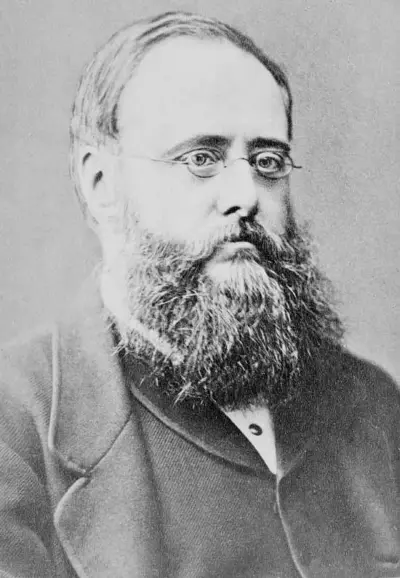
William Wilkie Collins was an English novelist and playwright known for The Woman in White (1859), and for The Moonstone (1868), which has been called the first modern English detective novel. Born to the London painter William Collins and his wife, the family moved to Italy when Collins was twelve, living there and in France for two years, which allowed the author to learn Italian and French. He worked initially as a tea merchant. After publishing Antonina, his first novel, in 1850, Collins met Charles Dickens, who became a friend and mentor. Some Collins works first appeared in Dickens's journals Household Words and All the Year Round. The two also collaborated on drama and fiction. Collins gained financial stability and an international following by the 1860s, but began to suffer from gout. He took opium for the pain, but became addicted to it. His health and his writing quality then declined in the 1870s and 1880s. Collins was critical of the institution of marriage: he split his time between widow Caroline Graves – living with her for most of his adult life, treating her daughter as his – and the younger Martha Rudd, by whom he had three children.
