Gordon Sinclair Quotes
Even the draft dodgers are not pursued and hounded. They are here on our streets, most of them... unless they are breaking Canadian laws .. are getting American dollars from Ma and Pa at home to spend here.
Sinclair, Gordon. "The Americans." CFRB, Toronto, 5 June 1973.

The importance of this quotation is twofold. First immigrants were given exemption from conscription into the army which Russians were subject to. Second, note that civil servants were also drafted. One of the main purposes of this was to be able to bring the few Russians who were literate into the government. If they were literate, they tended to have better options than the civil service and a draft was needed. But Russia was modernizing and the nation needed civil servants to perform the ministerial and administrative functions of a modern state.


The Congressman represented a heavily Italian district that was very ambivalent about fighting for America in World War I. He addressed his constituents.


The Shakers were an American religion and pacifists Lincoln learned. He was so impressed with their sincerity and way of life that he exempted Shaker men from the draft—the first conscientious objectors formally recognized in America. However, Lincoln made the statement to the Shakers which greatly impressed them and caused much reflection. Quakers had been pacifists also, but until the Civil War Draft there was no mechanism to test.

Theoretically every male citizen was supposed to serve in the Militia at that time. But if one did not, the penalty was a small fine. It became a status symbol. Those middle and upper class men who could get commissions as officers would serve, but those who did not have the political connections or the money to equip his own troops, would rather pay the fine than serve with men he thought beneath him. There is a , romantic American myth about the Militiamen in Colonial and Revolutionary America—the citizen soldiers who would leave their farms and rise to the military necessity of the day. However, not only were the militia very hard to muster to duty, but most actually didn’t own or have experience with firearms, and the prevailing opinion of knowledgeable military leaders from George Washington on down was that the militia were not very good soldiers. See {613015}, {613016}, {613022}, {613027}, {621987}, {621988}, {613030}, {613033}, & {613056}

Like many of the leading right wing hawks of his era, he was a hawk who had never served in the military. In addition they accused the lft wing draft dodgers as being unpatriotic.
This principle became the Civil War Draft. Ironically, when the draft was legislated by Congress, there were relatively few men drafted as enlistments increased. See {621897} .

He was a conscientious objector and pacifist and served a year in jail.

This is a fascinating quotation of the then leader of the Mormons. Historically, it shows us that many from the North, primarily to avoid the military draft of the Civil War, left their homes and emigrated to California, Washington and Oregon. In doing so, many passed through Salt Lake City and many became Mormons and stayed. These “Copperheads” included a serious peace movement at the time along with racists who didn’t want to risk their lives over the issue of slavery. Next we see the affinity that the Mormons had for the Copperheads. Actually, although the Mormons did not own slaves the church leadership had not been, well before the civil war, opposed to slavery and some were supportive of the institution. See {629157} and {629154}. Note the hostility that Young had for Abolitionists. At that time, a large proportion of the Abolitionists were religious Protestant laymen and laywomen and ministers. They were very outspoken and used writing and the media of the time to make their case. In almost all cases they also opposed polygamy and from a sexual morality point of view, saw it as little different from the slave owners sexual exploitation of his female slaves. Moreso than any other issue, polygamy was damaging the Mormon image amongst other Americans, It was the Abolitionists who were principle drivers of this negative image problem of the Mormons, So Young resented these “busybodies” and empathized with the Southerners not because he personally favored slavery, but they were both “victims” of the same set of do gooders. Young had a very limited narrow view of the rest of the country, and completely overestimated the prospects of the Southern Rebels.

“Edsel Ford was unhappy with his father’s decision but at the time could not stand up to him. His entire life he struggled to live down the fact that he did not do his part in WWI. He broke with his father when Henry supported Adolf Hitler, and arranged to have the Ford Motor Company totally devoted to war production in WWII against his father’s wishes. Edsel’s sons both served in the military in WWII. As for Roosevelt, all four of his sons fought in WWI and one was killed in action.

This is surprising to most people who believed the the Vietnam War draft resistance was the first in American History and an aberation. Actually, there have been active draft resistance in America as long as there has been military conscription.

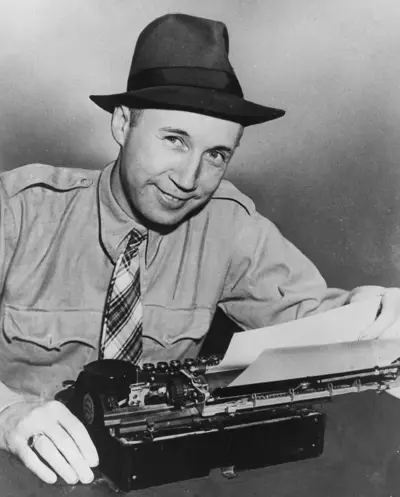
Allan Gordon Sinclair, OC, FRGS was a Canadian journalist, writer and commentator.
