Harry S. Truman Quotes
Europe today is hungry. I am not talking about Germans. I am talking about the people of the countries which were overrun and devastated by the Germans, and particularly about the people of Western Europe. Many of them lack clothes and fuel and tools and shelter and raw materials. They lack the means to restore their cities and their factories. As the winter comes on, the distress will increase. Unless we do what we can to help, we may lose next winter what we won at such terrible cost last spring. Desperate men are liable to destroy the structure of their society to find in the wreckage some substitute for hope. If we let Europe go cold and hungry, we may lose some of the foundations of order on which the hope for worldwide peace must rest. We must help to the limits of our strength. And we will.
Under Truman’s leadership, the United States not only fed and clothed the victim nations of Western Europe but also did the same for the Germans. The Russians assisted the counties that they occupied and Eastern Germany but to a much lesser degree as the Russians themselves had suffered major destruction and 22 million dead in WWII. There is no case in history where a country, not only gave humanitarian aid to its defeated enemy but rebuilt their entire economy as we did for Germany, Japan and Italy at the end of WWII.
Harry S Truman, 1884-1972, 33rd President of the United States (Democrat, MO), Radio Report to the American People on the Potsdam Conference, August 9, 1945
Sourced by: Eigen's Political and Historical Quotations


Things were looking bleak for the British & they were dependent on material help from the U.S. to give them a chance. The British navy was one of the largest and most powerful in the world & this cable was a veiled threat that if U.S. military aid did not come, England could not defend the country in the air, Churchill might be kicked out of office & his successors surrender to Germany turning over the British fleet to Hitler giving Germany control of the seas & with their ally Japan a naval force stronger than America’s. Anglophiles would not describe it as a threat, but merely a statement of the reality of the time. Roosevelt’s Ambassador to Britain, Joseph P. Kennedy, a Nazi sympathizer & some American military officers were opposed to aid to Britain seeing it as a lost cause. Roosevelt, however, acting on his own marvelous instinct, his advice from Harry Hopkins, and his back-channel contacts in England, decided that if armed Britain could hold out. He turned out to be right.

The program became known as "The Marshall Plan." The only soldier ever so honored


He was warning the majority and blaming them for what was to happen. Ironically, at the end of the First World War, Germany was so harshly treated because the allies felt that the Germans had been aforewarned not only by others but by opposition Germans as well.

Supporting foreign aid in the form of food relief:

This quotation provides a woman’s view of the hardship of the desert trail to the West where ghost towns were already present along the trail. Her phrase “Hope’s skeletons” is one of the vivid descriptions of the deserted houses along the trail to the West. Her letters were so well written and descriptive that they were published in the Atlantic Monthly.

This was written after the war when Germany was divided into four parts, later to become East and West Germany. German historical and cultural aggression and militarism, most policy makers feared, would cause more war if Germany was unified and allowed to become a strong state. NATO and The European Union became the federations that Kennan was seeking. And Germany underwent a radical cultural and political change.


The condition of most of Europe towards the end of WWII was dire. However, even then it was clear that since there were organized communists (partisans who fought the Nazis during the war) many of them would try and dominate the postwar politics in many counties. This was no surprise to American planners and policy makers.

In 1915 England had a food blockade against Germany. Germany had begun U-boat attacks on British flag civilian liners:


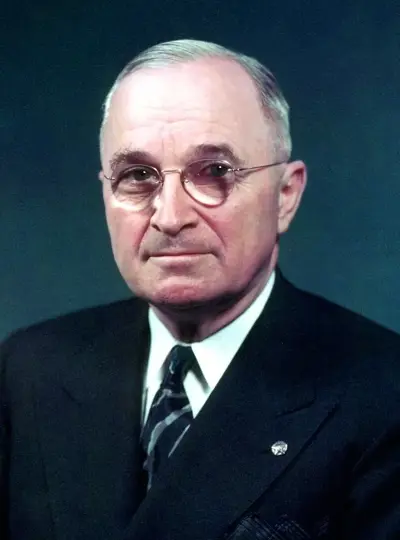
Harry S. Truman was an American politician who served as the 33rd President of the United States (1945–53). He served as a United States Senator from Missouri (1935–45) and briefly as Vice President (1945) before he succeeded to the presidency on April 12, 1945 upon the death of Franklin D. Roosevelt. He was president during the final months of World War II, and approved the plan to drop atomic bombs on Hiroshima and Nagasaki. Truman was elected in his own right in 1948. He presided over an uncertain domestic scene as America sought its path after the war and tensions with the Soviet Union increased, marking the start of the Cold War.
