Walter Reuther Quotes
England's battles, it used to be said, were won on the playing fields of Eaton.... America’s battles can be won on the assembly lines of Detroit.
The automobile assembly lines of Detroit, had been planned to be converted to factories to produce a huge supply of planes, tanks, trucks and guns which were instrumental in winning the Second World War.
Walter Reuther, 1907-1970, President, United Auto Workers, Speech 1940
Sourced by: Eigen's Political and Historical Quotations

The smaller German towns had not been targets for allied bombing and German censorship kept most Germans from realizing that the factories in the larger cities were being attacked. But the “rules of war” which the Germans had abandoned early in the war by bombing civilian targets in England and other European cities, required that only military targets be attacked. If a nation placed its factories or military bases in the midst of civilian populations, then the rules of war no longer protected the civilians. So the allies were within their rights by bombing the smaller towns where they targeted factories. However, this quotation is used by some critics to show that FDR’s motive was not the destruction of factories per se, but the breaking of German civilian morale. They argue that the allies were following the letter of the law, but not the spirit.


He has exactly right, but at the time there was much isolationist sentiment arguing against getting involved in “foreign wars”. To obtain the full industrial power of the United States, most of the manufacturing capability and raw materials would have to be taken from the civilian sector and devoted to military production. That would take men like Nelson, but primarily President Franklin Delano Roosevelt who would persuade the American people to make the immediate sacrifice to insure the future. See {642356} as an example.

“Arsenal of Democracy” is the famous FDR phrase whereby America was able to provide weapons for the other democracies to fight Fascism. At the time, the United States had the greatest manufacturing capability of the world. When Gingrich made this quotation, much manufacturing that had been done in America had moved offshore. However, one area that did not move offshore was military weapons manufacturing where the United States manufacturing capability was thriving but America was the largest arms manufacturer in the world and exported much of its weapons. This quotation is an example of a political technique called “conflation.” Gingrich took an area where there was legitimate concern about the nation’s loss of manufacturing and implied that the problem was affecting our military and defense capability as well which was not do at all. However, while most Americans knew of the manufacturing job loss, they did not know that the defense manufacturing was the strongest in the world. So they became even more alarmed at the problem of general manufacturing loss.

Explaining the origin of the Interstate Highway System:


Women were needed in industry and the military. See {584783}.


After Japan attacked Pearl Harbor, we declared war on Japan. Germany then declared war on the United States, and America was in the fight. But the earlier policy had been to provide weapons, food, and supplies.


Ford, an inveterate racist and anti-Semitic in his old age was very liberal when he first started and accomplished so much. He not only hired foreigners, but also some men of his initial workforce were handicapped. He was proud of the fact that jobs could be created on his concept of an assembly line that was so specialized that handicapped people could be productive workers as they did not have to do everything in the manufacturing process. Since the assembly line did the moving, men who had trouble walking could sit and be very productive at some tasks. Further, Ford did not try and pay his assembly line workers less than the going wage because their skills could be much narrower. He actually doubled the salaries (see {642361}) and picked men who were not wed to the older, traditional way of manufacturing things. The productivity came from the engineering of the cars and the assembly line, not be cutting wages, a practice that he did not continue as he grew older and tried to make his money the traditional way of exploiting the workers more. When the other auto companies had recognized the union, the elder Ford would not.


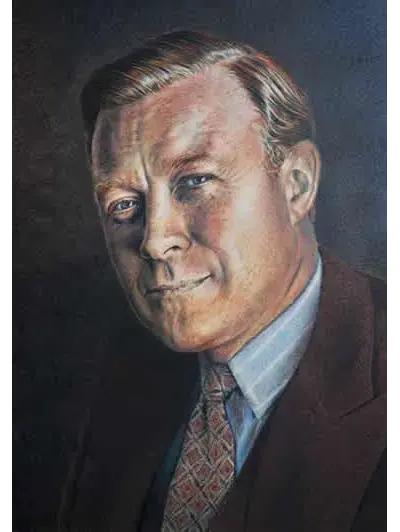
Walter Philip Reuther was an American leader of organized labor and civil rights activist who built the United Automobile Workers (UAW) into one of the most progressive labor unions in American history. He saw labor movements not as narrow special interest groups but as instruments to advance social justice and human rights in democratic societies. He leveraged the UAW's resources and influence to advocate for workers' rights, civil rights, women's rights, universal health care, public education, affordable housing, environmental stewardship and nuclear nonproliferation around the world. He believed in Swedish-style social democracy and societal change through nonviolent civil disobedience. He survived two attempted assassinations, including one at home where he was struck by a 12-gauge shotgun blast fired through his kitchen window. He was the fourth and longest serving president of the UAW, serving from 1946 until his untimely death in 1970.
