Susan Sontag Quotes
Enemies are somewhere else, as the fighting is almost always “over there,” with Islamic fundamentalism now replacing Russian and Chinese communism as the implacable, furtive menace. And “terrorist” is a more flexible word than “communist.” It can unify a larger number of quite different struggles and interests. What this may mean is that the war will be endless---since there will always be some terrorism.
Sontag, Susan. Regarding the Pain of Others. Farrar, Straus and Giroux, 2003.


Islamic terrorists took over one of the major cities of Mali, a former French colony, and controlled the immediate area imposing Sharia (Islamic Law). The Mali government and military tried to prevent the takeover, but the military was too weak. The French President, with the support of the Mali government, immediately dispatched French special troops to Mali. They quickly defeated and ousted the terrorists before they could attract more Islamic jihadist fighters and before they could incite Muslims in other areas to try and take over to install Sharia.


The Pakistani Government at the time and for most of the history of that nation did not have much control over the military, and regardless of what agreements the civilian government might have made, the military did not wanted to curry favor with as many Islamic radical terrorist groups as possible even though they even killed Muslims of Pakistan. They would not send the military into Northern Pakistan (Waziristan) to eliminate the Taliban sanctuaries or offend their tribal "hosts" as they were so paranoid about India that they wanted the terrorists as allies.

This is one of the quotations from the Koran which many Islamic terrorists point to in order to morally justify terrorism. For an example, see {586965}.


The military attack on the Taliban was a great success and the regime was ousted very rapidly. Once the regime was displaced, however, the military was faced with an extremely decentralized country with sporadic resistance from Taliban sympathizers and with the tough task of rebuilding the dilapidated country.

Most were tracked down and assassinated by Israeli agents. The mastermind, Abu Daud was seriously wounded but was not attacked again when the Israeli’s and Palestinians began their peace negotiations.


He controlled a Shiite political party with its own armed militia.


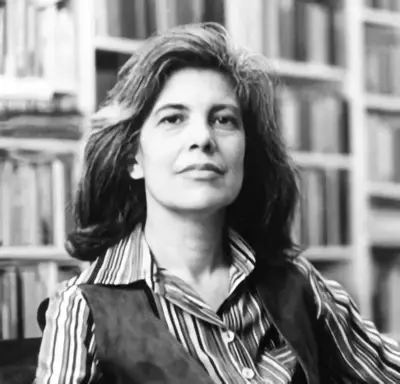
Susan Sontag was an American writer, filmmaker, philosopher, teacher, and political activist. She mostly wrote essays, but also published novels; she published her first major work, the essay "Notes on 'Camp'", in 1964. Her best-known works include the critical works Against Interpretation (1966), Styles of Radical Will (1968), On Photography (1977), and Illness as Metaphor (1978), as well as the fictional works The Way We Live Now (1986), The Volcano Lover (1992), and In America (1999).
