Susan Sontag Quotes
It is hard for people not to see the world in polarizing terms ("them" and us") and these terms have in the past strengthened the isolationist theme in American foreign policy as much as they now strengthen the imperialist theme. Americans have got used to thinking of the world in terms of enemies. Enemies are somewhere else, as the fighting is almost always "over there," with Islamic fundamentalism now replacing Russian and Chinese communism as the implacable, furtive menace to "our way of life." And terrorist is a more flexible word than communist. It can unify a larger number of quite different struggles and interests.
Susan Sontag, 1933-2004, Writer & Critic, Speech upon being awarded the Friedenspreis des Deutschen Buchhandels (Peace Prize of the German Book Trade), Frankfurt Book Fair, October 12, 2003
Sourced by: Eigen's Political and Historical Quotations


See {586916} for a passage from the Koran supporting his point.

Fanatic Muslims believe that suicide bombers when they blow themselves up have done so to defend Islam and therefore will not only go directly to heaven but will get 72 Virgins when they get there. Most of the suicide bombers are young men with very little or no sexual experience. At the time that Trainor made this remark, there had been an enormous increase in suicide bombers in the Iraq war.

She had been covering Muslim nations and leaders for a long time and saw the relationship between the contemporary domination of Islamic fundamentalism and terrorism long before most.


Response to an aide who was worrying that the CIA was recruiting too many radical fundamentalists to fight in Afghanistan against the Russians as opposed to middle of the road Muslims. The fundamentalists were very successful against the Russians, but then they turned on the United States and we had to go to war to rout them out.

The “area” was Chechnya, a province of Russia with a substantial Muslim population. Islamic forces were not as unhappy in the Russian Communist days in the Christian Orthodox church was subdued, but after the fall of Communism, the Russian Orthodox church had a revival, and that exacerbated all the independence aspirations that existed for years in Chechnya.


The quotation is notable as it illustrates the great difficulty that modern democracies have with extreme Islamic fundamentalists. Their very perception and world view is so different that often we think of the extremists as insane and they often feel the same way about us.

“Martyrdom” is the euphemism that fundamentalist Muslims use to denote being killed while “fighting for Islam” or on a suicide mission for same. Many believe that such people ascend directly to Paradise where they are given a bevy of virgins and other “perks.” Ironically, this was the last interview that he gave before he himself was “martyred”—he was killed by coalition troops. This mental perspective is one of the reasons that fighting fundamentalist Islamic terrorists is so difficult. They perceive victory whichever way the battle or even the war comes out.

Islamic religious extremists do not allow freedom of religion, freedom of speech, freedom of the press, right to life, freedom from torture and mutilation, self-government, gender equality, protection of children or women from violence, sexual freedom, freedom of expression, reproductive rights for women, right work, which are just a few. The modern Islamic extremists allow about the same human rights as did the Christian Kings and the Church of 1000 years ago. Ironically, it is less respect for human rights that many of the great Islamic societies provided 1000 years ago.


Islamic terrorists took over one of the major cities of Mali, a former French colony, and controlled the immediate area imposing Sharia (Islamic Law). The Mali government and military tried to prevent the takeover, but the military was too weak. The French President, with the support of the Mali government, immediately dispatched French special troops to Mali. They quickly defeated and ousted the terrorists before they could attract more Islamic jihadist fighters and before they could incite Muslims in other areas to try and take over to install Sharia.
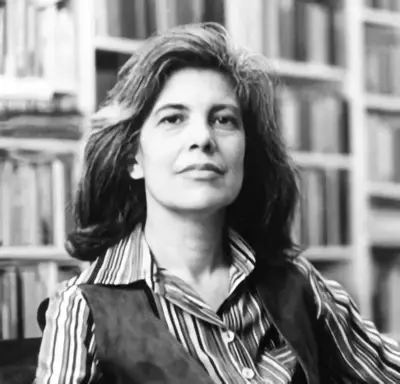
Susan Sontag was an American writer, filmmaker, philosopher, teacher, and political activist. She mostly wrote essays, but also published novels; she published her first major work, the essay "Notes on 'Camp'", in 1964. Her best-known works include the critical works Against Interpretation (1966), Styles of Radical Will (1968), On Photography (1977), and Illness as Metaphor (1978), as well as the fictional works The Way We Live Now (1986), The Volcano Lover (1992), and In America (1999).
